Museveni’s Son and Army Chief Boasts of Killings, Says Current Count Too Low, Promises More


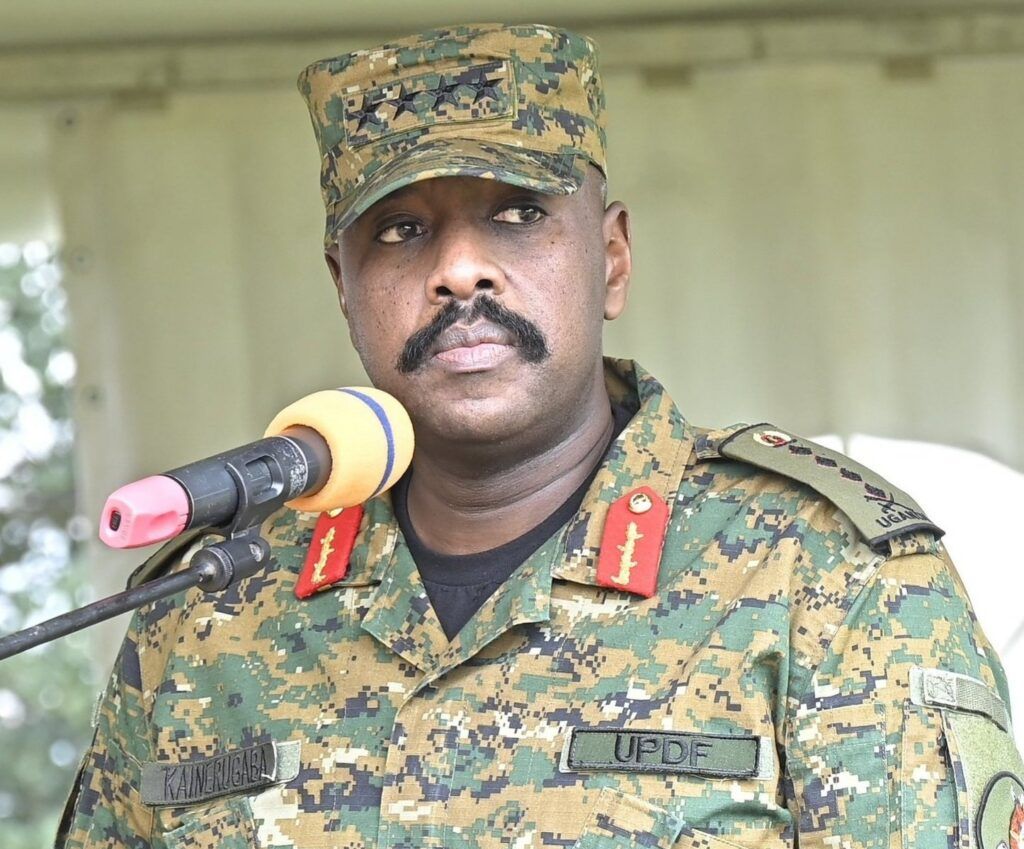
Fresh concerns have emerged over Uganda’s political stability after a series of violent and threatening social media posts attributed to General Muhoozi Kainerugaba, the son of President Yoweri Museveni and Uganda’s Chief of Defence Forces, surfaced in the aftermath of the country’s disputed election.
This publication has seen multiple posts shared on the general’s verified social media account in which he makes explicit threats against supporters of the opposition National Unity Platform (NUP) and its leader, Bobi Wine. In the posts, Kainerugaba claims responsibility for killings and warns of further violence, language that has sparked widespread alarm both locally and internationally.
In the statements, the army chief refers to NUP supporters as “terrorists” and suggests they would be killed on sight unless otherwise instructed. In other posts, he boasts about the number of people allegedly killed in recent days and expresses intent to increase that number. The remarks also include direct and graphic threats directed at Bobi Wine, Uganda’s main opposition leader, who is currently in hiding.
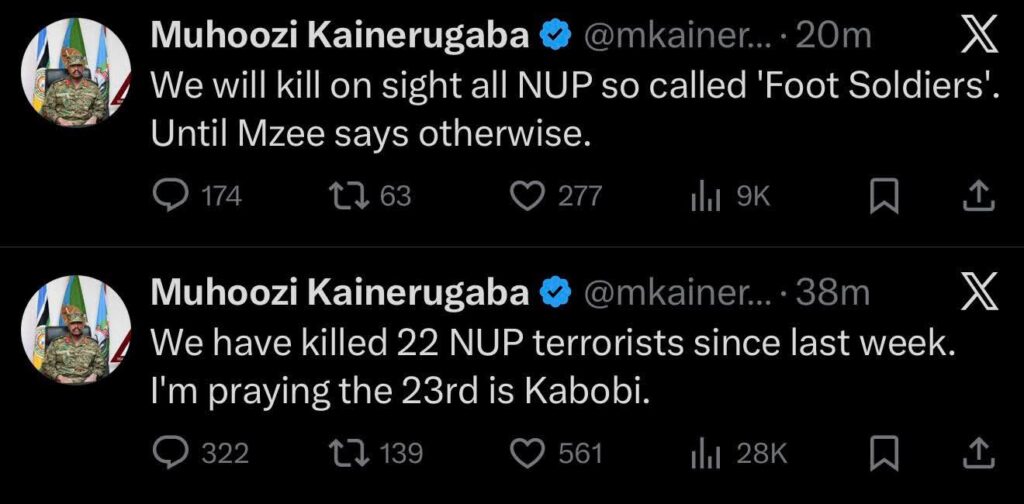
The posts, which circulated rapidly across social media platforms, have been condemned by opposition figures and civil society groups, who say such rhetoric from a serving military commander amounts to open incitement to violence and undermines the rule of law.

These developments come against the backdrop of deadly incidents reported on election day, when clashes involving security forces and civilians led to loss of life in several areas. While official casualty figures remain disputed, multiple reports confirm that people were killed during election-related unrest, further heightening tensions in an already volatile environment.
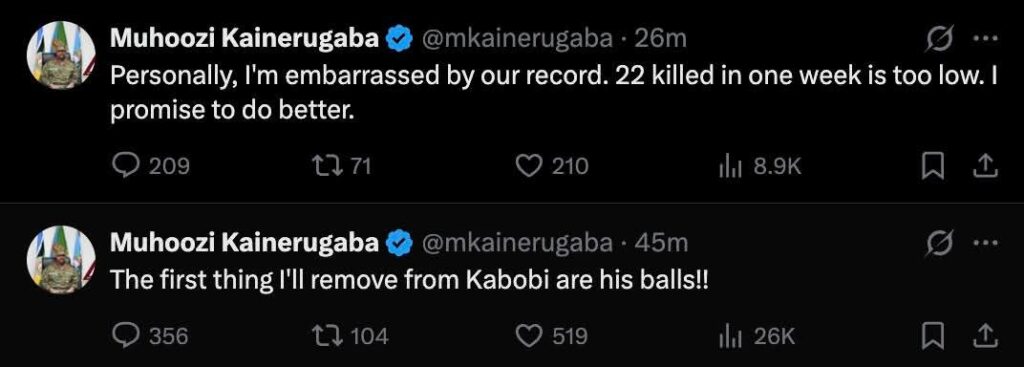
Bobi Wine, whose real name is Robert Kyagulanyi, has rejected the election outcome and has raised concerns for his personal safety. His party says the threats from the president’s son have forced him into hiding, fearing arrest or worse.
Political analysts warn that inflammatory statements by powerful individuals, particularly those holding senior military positions, risk escalating fear and violence in the country. They argue that the use of social media to issue such threats erodes public trust in state institutions and deepens Uganda’s political crisis.
As pressure mounts, there are growing calls for authorities to clarify the authenticity and intent of the posts and to reaffirm the military’s commitment to neutrality, restraint, and the protection of civilian life.
About the Author

The Updated World delivers timely and well-researched articles on various topics, including the latest news updates, health, wellness, sports, current affairs, and more.
Related Contents