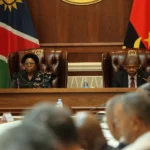
Supreme Court Stops Competition Commission Investigation Over Pharmacy Pricing



The Supreme Court of Namibia has dismissed an appeal by the Namibian Competition Commission, ruling that the Commission acted unlawfully by allowing its Secretary to initiate an investigation into alleged price-fixing in the pharmaceutical sector.
The case arose from a long-running dispute over a uniform 50% mark-up on medicines, which the Commission suspected could amount to illegal price-fixing by the Pharmaceutical Society of Namibia (PSN) and affiliated pharmacies. However, the country’s highest court found that the investigation was improperly started and therefore legally flawed.

At the centre of the judgment was the question of who is legally authorised to begin investigations under the Competition Act. The court ruled that this power rests exclusively with the Competition Commission itself and cannot be delegated to an individual official such as the Secretary.
In its judgment, the court found that although the Commission is supported by staff for administrative purposes, the decision to start an investigation is a core statutory function that must be exercised by the Commission as a collective body or, where permitted by law, by a properly appointed committee. Delegating this responsibility to the Secretary was found to be contrary to the Act.

The court further rejected the Commission’s reliance on internal rules and operational arrangements to justify the delegation, stating that administrative rules cannot override or amend powers clearly set out in legislation passed by Parliament.
As a result, the investigation into PSN and other pharmacies was declared unlawful from its inception. The court emphasised, however, that the ruling does not amount to a finding on whether price-fixing occurred. Instead, it focused solely on the legality of the investigative process.
Importantly, the Supreme Court did not permanently close the matter. It referred the issue back to the Competition Commission, allowing it to decide whether to restart the investigation correctly or to proceed to court using the information already gathered—provided the Commission itself, and not its Secretariat, takes the decision.
The Competition Commission was ordered to pay the costs of the appeal.
About the Author

The Updated World delivers timely and well-researched articles on various topics, including the latest news updates, health, wellness, sports, current affairs, and more.
Related Contents