China Urges U.S. and Iran to Honor MoU as Diplomatic Tensions Deepen


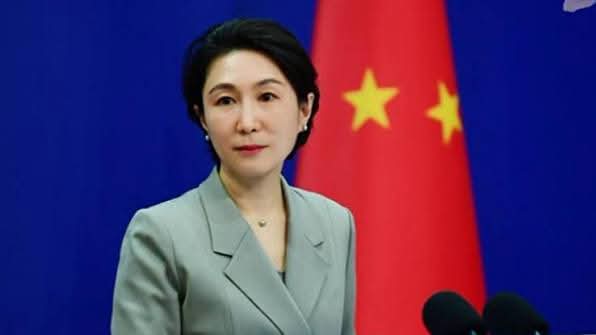
As tensions simmer once again in the Middle East, China is stepping into the conversation with a clear message: the path forward for the United States and Iran must be grounded in dialogue, not confrontation.
During a routine press briefing in Beijing on Wednesday, Foreign Ministry spokesperson Mao Ning urged both nations to fully implement the memorandum of understanding they previously signed an agreement that has often been overshadowed by the region’s fast‑moving political developments. Her remarks carried a tone of caution shaped by the rising friction between Washington and Tehran.

Mao stressed that the MoU remains an essential framework for managing disagreements and preventing escalation. She warned that renewed conflict “serves no party’s interests,” adding that military action cannot resolve the deeper political grievances fueling the current stand off. Her comments come at a moment when both sides have exchanged sharp rhetoric, raising concerns about miscalculation.
China’s appeal is part of a broader diplomatic posture it has adopted in recent years. Beijing has increasingly positioned itself as a stabilizing voice in Middle Eastern affairs encouraging dialogue between regional rivals, supporting de‑escalation efforts, and advocating for agreements that reduce the risk of conflict.

Analysts say this approach reflects both principle and pragmatism: China’s economic ties to the region are extensive, and any instability threatens global markets and trade routes.But beyond economics, China’s message underscores a belief that long term stability depends on sustained engagement.
By calling on the U.S. and Iran to honor their MoU, Beijing is signaling that existing diplomatic tools should be used to ease tensions rather than abandoned when pressure mounts.The statement also highlights China’s growing confidence on the global stage.
While Beijing has traditionally avoided direct involvement in U.S. Iran disputes, its recent remarks show a willingness to speak out when it believes broader international stability is at risk. For now, China’s call adds another voice urging restraint.
Whether Washington and Tehran respond remains uncertain. But as the region watches closely, Beijing’s message is unmistakable: diplomacy however slow or imperfect remains the only path capable of preventing the next crisis.
About the Author

The Updated World delivers timely and well-researched articles on various topics, including the latest news updates, health, wellness, sports, current affairs, and more.
Related Contents