Mali and Burkina Faso React to U.S. Travel Ban with Entry Restrictions on Americans


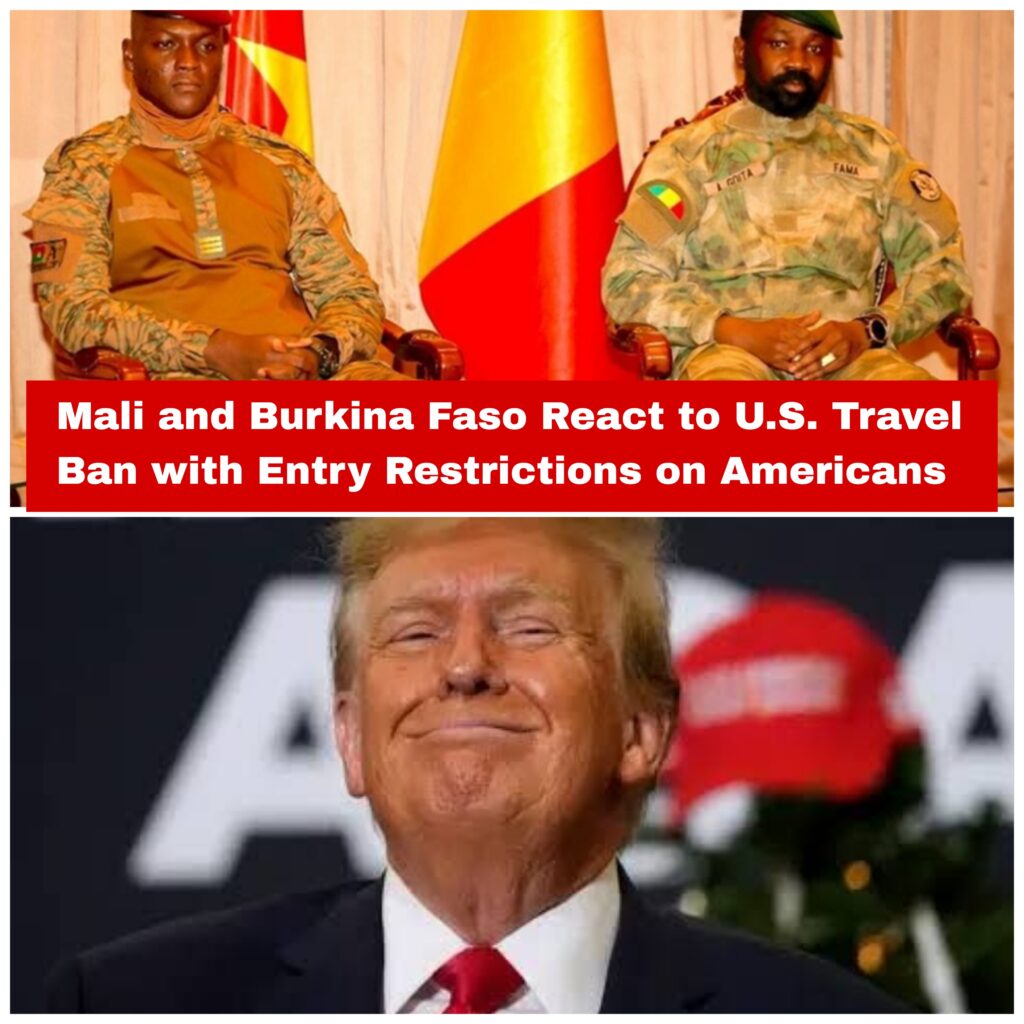
Tensions between the United States and parts of West Africa’s military-led governments are deepening after Mali and Burkina Faso revealed plans to restrict entry for U.S. citizens. The announcement comes shortly after Washington broadened its own travel limitations to include the two Sahel nations, as well as neighboring Niger.
The U.S. government justified its decision by pointing to persistent security threats, including frequent attacks by armed and extremist groups operating across the region. These concerns have long shaped Washington’s policy toward the Sahel, where instability, insurgency, and political uncertainty continue to dominate headlines.

In response, Mali and Burkina Faso both governed by military juntas following coups in recent years are now preparing retaliatory measures that would bar American nationals from entering their territories. Officials from the two countries argue that the U.S. restrictions unfairly single them out and fail to acknowledge their ongoing efforts to restore security and sovereignty.
The developments underscore the increasingly strained relationship between Western powers and Sahelian military governments, which have gradually distanced themselves from traditional allies such as the United States and France. In recent years, Mali and Burkina Faso have sought alternative security partnerships while emphasizing national control over their political and military affairs.

Despite repeated assurances from the ruling juntas that militant groups would be defeated, large parts of both countries remain affected by violence. Armed attacks continue to target civilians, security forces, and infrastructure, raising doubts among international observers about the effectiveness of current counterinsurgency strategies.
The reciprocal travel bans also reflect a broader diplomatic shift in the region, where mistrust between Western governments and military-led states is growing. Analysts warn that such measures could further isolate the Sahel countries, affecting diplomatic engagement, humanitarian cooperation, and international mobility.
About the Author

The Updated World delivers timely and well-researched articles on various topics, including the latest news updates, health, wellness, sports, current affairs, and more.
Related Contents