Museveni’s Son and Uganda’s Army Chief Issues Apology After Accusing U.S. Embassy


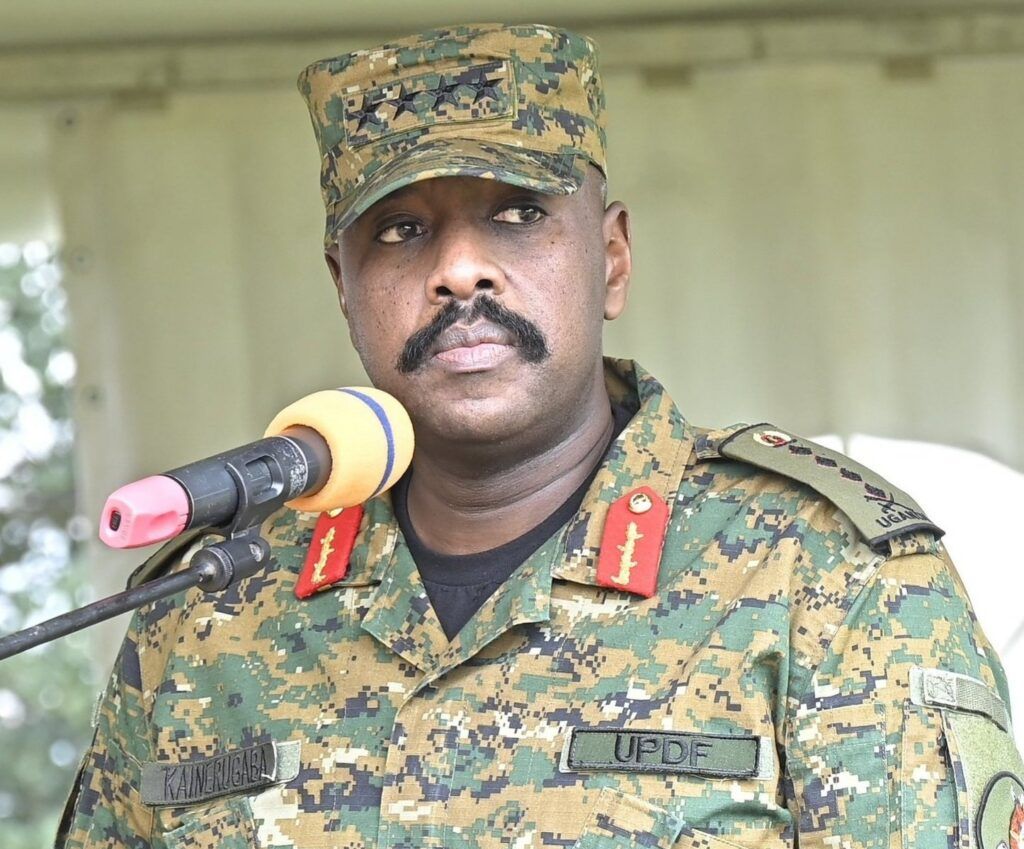
Uganda’s Chief of Defence Forces, General Muhoozi Kainerugaba, caused a brief diplomatic stir on Friday after publicly accusing the United States Embassy in Kampala of interfering in Uganda’s politics only to reverse the claim less than an hour later and apologise.
The controversy began when General Kainerugaba posted on social media that Uganda’s military was cutting ties with the U.S., alleging that embassy officials had helped opposition leader Bobi Wine evade Ugandan authorities. At the time, Bobi Wine had reportedly gone missing following heightened political tensions in the aftermath of the country’s recent presidential election.

In his initial remarks, the army chief suggested that the alleged actions by the U.S. Embassy had crossed a serious line and undermined trust between the two countries. He implied that military and security cooperation would be affected, a statement that quickly drew attention both inside Uganda and abroad due to the long-standing partnership between Kampala and Washington.
However, the situation changed rapidly. Roughly an hour later, General Kainerugaba deleted the earlier posts and issued a public apology. He said the claims had been based on incorrect information and confirmed that he had spoken directly with the U.S. Ambassador to clear up the matter.

In his follow-up message, the army chief described the United States as “great friends” of Uganda and stressed that relations between the two countries remained strong. He also confirmed that cooperation between the Ugandan military and the U.S. would continue as normal.
The brief episode unfolded against a tense political backdrop. Uganda is still dealing with the fallout from a disputed presidential election, with opposition figures raising concerns about intimidation, arrests, and restrictions on political activity. Bobi Wine, a long-time critic of President Yoweri Museveni’s government, has previously reported being targeted by security forces, making his sudden absence a sensitive issue.
Political analysts say the incident reflects how quickly emotions and misinformation can escalate during periods of political uncertainty, especially when senior officials use social media to communicate.
About the Author

The Updated World delivers timely and well-researched articles on various topics, including the latest news updates, health, wellness, sports, current affairs, and more.
Related Contents