Why the U.S. Dollar Is Weakening and What It Means for Africa and Namibia


The U.S. dollar is going through one of its weakest periods in recent history. In 2025, the U.S. Dollar Index fell by about 9–10%, marking its worst annual performance in nearly eight years. This decline was significant because the dollar has traditionally strengthened during times of global uncertainty. Instead, investors began moving money away from the United States.
During the same period, several currencies strengthened sharply against the dollar. The South African rand gained roughly 13% against the USD, one of its strongest annual performances in more than a decade. Because the Namibian dollar is pegged to the rand, Namibia experienced the same movement, with the exchange rate shifting from above N$18 per US dollar to around N$16.50 and below.
Interest Rates and Slowing U.S. Growth
One of the key drivers behind the weakening dollar is the outlook for U.S. interest rates. As inflation cooled and economic growth slowed, financial markets began pricing in interest rate cuts by the U.S. Federal Reserve.
Higher interest rates usually attract foreign investors to the dollar. However, once investors expect rates to fall, the incentive to hold dollars weakens. This has pushed capital toward other regions, including emerging markets. African assets, particularly bonds and equities, became more attractive as investors searched for better returns outside the U.S.

Trump’s Return and Rising Policy Uncertainty
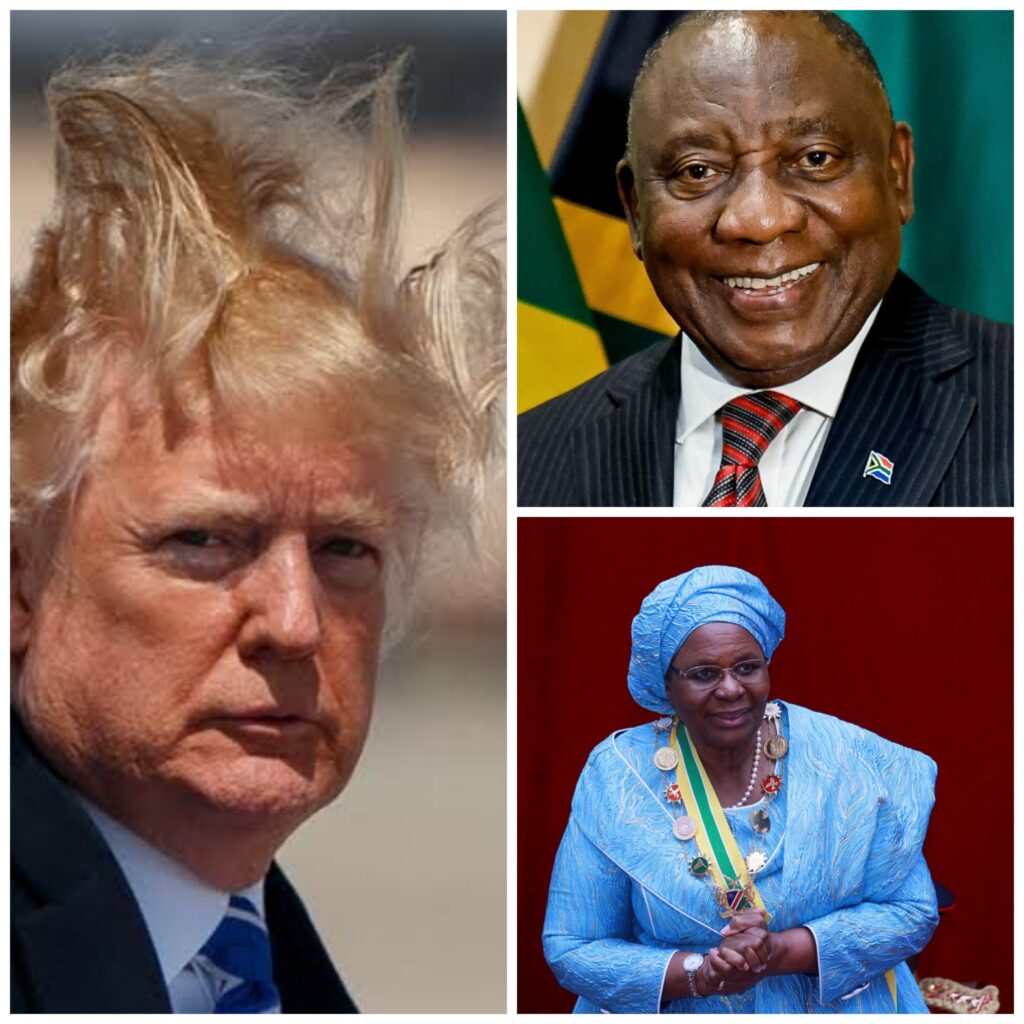
Political uncertainty in the United States has also contributed to the dollar’s weakness. Donald Trump’s return to power revived concerns about unpredictable trade and economic policies. His renewed focus on tariffs and protectionist measures raised fears of new trade wars and disrupted global supply chains.
Markets tend to react negatively to uncertainty. In 2025, investors became increasingly cautious about U.S. policy direction, particularly regarding trade, fiscal spending, and the independence of the Federal Reserve. As confidence weakened, the dollar lost part of its traditional “safe haven” status, accelerating its decline.
U.S.–South Africa Tensions and Regional Impact
Tensions between the United States and South Africa have added to global uncertainty. South Africa is Africa’s most industrialised economy and a key trade partner for the region. Diplomatic disagreements, trade concerns, and tariff threats created unease among investors.
Instead of strengthening the dollar, these tensions had the opposite effect. Investors viewed the disputes as another sign of unstable U.S. foreign and trade policy. Capital flowed toward other markets, helping to strengthen the rand. Since Namibia’s currency is directly linked to the rand, these developments also influenced the Namibian dollar.
Africa’s Gradual Move Away from the Dollar
Across Africa, governments are slowly reducing their dependence on the U.S. dollar. This shift is driven by practical economic reasons rather than politics. Heavy reliance on the dollar has historically exposed African economies to imported inflation, high transaction costs, and vulnerability to U.S. policy changes.
Several countries have taken steps to diversify. Zimbabwe introduced a gold-backed currency in an effort to reduce domestic use of the USD. Egypt has entered trade arrangements that allow settlements in non-dollar currencies. Zambia has expanded the use of the Chinese yuan in trade with China, while Kenya and other East African countries are promoting regional trade in local currencies.
These actions do not eliminate the dollar but reduce overdependence on it.
Intra-African Trade and New Payment Systems
Africa’s trade landscape is also changing under the African Continental Free Trade Area (AfCFTA). One of its major goals is to increase trade within the continent and reduce reliance on external currencies.
New payment and settlement systems now allow African countries to trade using local currencies instead of converting everything into U.S. dollars. As intra-African trade grows, the global demand for the USD naturally declines, putting further pressure on the currency.
What a Weaker Dollar Means for Namibia
For Namibia, the weakening of the U.S. dollar has brought both relief and risk. A stronger Namibian dollar has helped reduce the cost of USD-priced imports such as fuel, machinery, medical supplies, and some food products. This has eased inflationary pressure at a time when households are already under financial strain.
There is also a fiscal benefit. External debt repayments denominated in U.S. dollars become cheaper when the dollar weakens, offering temporary relief to government finances.
However, a stronger local currency can make exports less competitive on global markets. If global demand slows, Namibia’s export sectors could face challenges despite favourable exchange rates.
The USD remains the world’s dominant reserve currency. However, its share of global foreign exchange reserves has declined from over 70% in the early 2000s to below 60% in recent years, showing a clear long-term shift.
For Africa and Namibia, this period represents a transition. The continent is no longer only reacting to global currency movements but is increasingly shaping its own trade and financial systems. How effectively African countries manage this shift will determine whether they benefit from a more balanced global economy or remain exposed to future shocks.
About the Author

The Updated World delivers timely and well-researched articles on various topics, including the latest news updates, health, wellness, sports, current affairs, and more.
Related Contents