Namibia Ranks Among Africa’s Most Import-Dependent Economies


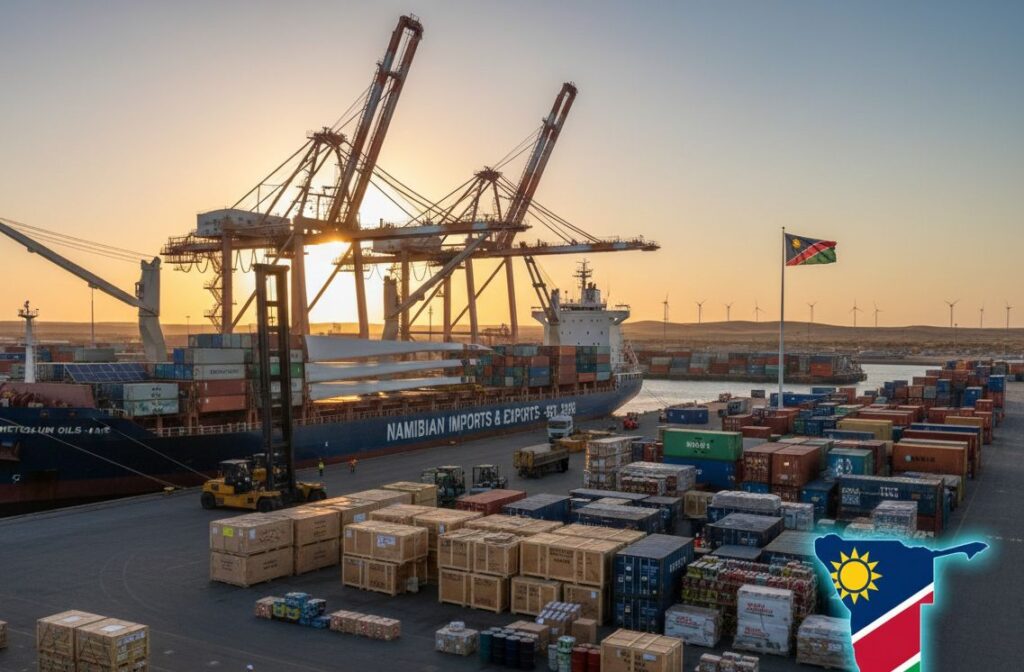
Namibia has been ranked among Africa’s most import-dependent economies, highlighting persistent structural challenges that continue to limit local production and expose the country to external economic shocks.
According to data compiled from the World Bank, Namibia’s imports account for approximately 68 percent of its Gross Domestic Product (GDP), placing the country fourth among the top ten most import-reliant economies on the continent. The ranking reflects the extent to which national consumption and industrial activity depend on goods sourced from outside the country.
The report shows that Namibia is not alone in this situation. Several African countries, including Libya, Guinea, Mozambique, Tunisia, and Eswatini, import goods valued at more than half of their total economic output. At the top of the list are Somalia and Lesotho, where imports are estimated at nearly 99 percent of GDP, indicating extremely limited domestic manufacturing capacity.
Despite ongoing efforts to strengthen regional trade, Africa continues to trade more with external markets than within the continent. Intra-African trade remains below 20 percent of total trade, a figure that underscores the slow pace of industrialisation and weak integration of regional value chains.

The establishment of the African Continental Free Trade Area (AfCFTA) was intended to reverse this trend by encouraging member states to trade more with one another, reduce tariff barriers, and stimulate local manufacturing. However, implementation challenges, infrastructure gaps, and uneven industrial development have limited the agreement’s immediate impact.
Economists warn that heavy reliance on imports leaves countries vulnerable to currency volatility, global supply chain disruptions, and rising international prices. For Namibia, sustained import dependence also places pressure on foreign exchange reserves and can weaken the local currency during periods of global uncertainty.
While Namibia benefits from regional trade arrangements and a relatively stable policy environment, analysts argue that stronger investment in local manufacturing, agro-processing, and energy production is essential to reduce long-term exposure to external markets.
Experts say the AfCFTA still presents an opportunity for Namibia and other highly import-dependent economies to gradually reduce reliance on foreign goods. By promoting regional production networks and expanding domestic industrial capacity, countries can improve economic resilience and create jobs.
Without accelerated reforms and targeted investment, however, high import dependence is likely to persist, continuing to limit economic growth and leaving vulnerable economies exposed to global economic shifts.
About the Author

The Updated World delivers timely and well-researched articles on various topics, including the latest news updates, health, wellness, sports, current affairs, and more.
Related Contents