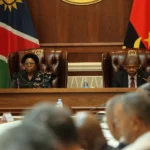
Amupanda Pushes Government to Advertise Top Anti-Corruption Posts



The Affirmative Repositioning (AR) movement has called on the government to publicly advertise the positions of Director-General and Deputy Director-General of the Anti-Corruption Commission (ACC), arguing that all qualified Namibians should be given an opportunity to compete for the country’s top anti-corruption posts.
The call was made by AR leader and Member of Parliament, Job Amupanda, in a social media post in which he revealed that the movement is engaging the government, particularly Prime Minister Elijah Ngurare, to ensure that the positions are advertised before the current office holders’ terms come to an end in June and July this year.

According to Amupanda, the positions should have been advertised earlier to allow for a transparent and competitive recruitment process. He maintained that suitably qualified Namibians who meet the required standards should be afforded an equal opportunity to apply for the positions.
“We are busy engaging government, the Prime Minister in particular, to ensure that the position of Director-General and Deputy Director-General of the Anti-Corruption Commission are advertised,” Amupanda stated, adding that the engagements have thus far been “good and promising in national interest.”

The AR leader linked the matter to constitutional principles, citing Article 18 of the Namibian Constitution, which deals with administrative justice, and Article 1, which establishes Namibia as a democratic state founded on principles of justice and equality before the law.
The Anti-Corruption Commission is one of Namibia’s key institutions tasked with preventing, investigating, and combating corruption in both the public and private sectors. The Director-General serves as the chief executive officer of the commission and oversees its operations, investigations, public education programmes, and institutional strategy. The Deputy Director-General supports the implementation of these functions and assists in the administration of the commission.
The issue of leadership appointments at independent institutions has often attracted public scrutiny in Namibia, particularly regarding transparency, accountability, and equal access to public office. Civil society organisations and governance advocates have in the past called for open and competitive recruitment processes for senior positions in public institutions, arguing that such measures strengthen public confidence and institutional independence.
While AR’s intervention appears to have been framed as a governance and transparency issue rather than a partisan political matter, Amupanda noted that the ultimate outcome of the engagements remains to be seen.
“So far the engagements are good and promising in national interest, but politics being politics, we will see the actual results and inform you accordingly on both the outcomes and recourse,” he said.
The government has not yet publicly announced whether the ACC leadership positions will be advertised or what process will be followed in filling the posts once the current terms expire.
The development comes at a time when public institutions across Namibia continue to face growing expectations to demonstrate transparency, merit-based recruitment, and accountability in leadership appointments, particularly in bodies entrusted with safeguarding good governance and fighting corruption.
About the Author

The Updated World delivers timely and well-researched articles on various topics, including the latest news updates, health, wellness, sports, current affairs, and more.
Related Contents