Itula Defends Slow Pace of Lawmaking, Says Parliament Must Pass Just Laws


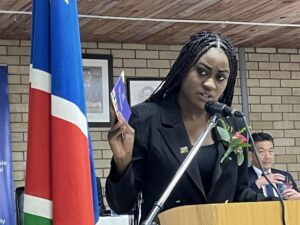
Independent Patriots for Change (IPC) president and Leader of the Official Opposition, Dr Panduleni Itula
Panduleni Itula, says the slow pace of passing legislation in Namibia’s 8th Parliament should not be seen as a failure, arguing that Parliament’s priority must be to pass laws that are constitutional, just and properly debated.
Itula was responding to questions on concerns that Parliament has not passed any substantive legislation since the new administration took office, apart from budget-related bills.
He said the discussion is not simply about the number of bills passed, but about how Namibia is governed and whether Parliament is carrying out its constitutional responsibility.

“The question is how we are governed in the Republic of Namibia and what are the tools and the rules governing the manner in which we are governed,” he said.
While acknowledging public concerns over the slow pace of lawmaking, Itula said many people commenting on the issue do not fully understand how Parliament functions.
“One of the greatest enemies of knowledge is not ignorance, but the illusion of knowledge,” he said.
According to Itula, Parliament consists of two chambers, the National Assembly and the National Council, and every bill must pass through both before it can be signed into law by the President.
He explained that every proposed law must be debated thoroughly and scrutinised clause by clause to ensure it complies with the Constitution before it is passed.
“It is the constitutional duty of Parliament to debate and legislate for the governance of our Republic,” he said.
Itula said every Member of Parliament has taken an oath to uphold and defend the Constitution and therefore has a responsibility to ensure that only constitutional and lawful legislation is approved.
He said the IPC supports the rule of law and cannot support legislation simply to increase the number of bills passed.
“We cannot support the passage of unjust laws where parliamentary procedures have not been followed,” he said.
Itula added that Namibia’s history under colonialism and apartheid serves as a reminder of the dangers of unjust laws, saying Parliament has a duty to ensure legislation protects the rights of all citizens.
He rejected claims that the IPC is delaying the passage of bills, saying the party is instead insisting that Parliament follows constitutional procedures and its own standing rules.
According to him, the public perception that Parliament is moving too slowly is partly due to a lack of understanding of the legislative process. He explained that every clause of a bill may be debated by Members of Parliament, making the process lengthy, especially for complex legislation.
Itula also criticised what he described as the arbitrary use of discretionary powers by the presiding officer of the National Assembly. He argued that such decisions can prevent Members of Parliament from fully debating legislation and may conflict with Article 18 of the Namibian Constitution, which requires administrative decisions to be lawful and fair.
He said presiding officers should remain impartial and avoid interpreting parliamentary rules in a manner that limits debate.
Responding to criticism over the IPC’s absence during some parliamentary votes, Itula said the party would not legitimise what it believes are procedural irregularities by participating in votes where parliamentary rules have not been properly followed.
He argued that a parliamentary majority should not use its numbers to pass legislation without respecting due process.
Referring to Standing Rules 141 and 152 of the National Assembly, Itula said these rules govern how disagreements in the House should be handled and should be applied fairly to both the majority and minority parties.
He encouraged the public to familiarise themselves with Parliament’s procedures to better understand why legislation sometimes takes longer to pass.
Itula maintained that the IPC remains committed to ensuring that every law passed by Parliament is constitutional, lawful and in the best interests of the Namibian people.
“Our desire as the IPC to pass just laws cannot be compromised by statistics on the number of laws passed or the time frame within which they are adopted,” he said.