Nkandeka (Onghandeka/Open Palm Boxing) Makes Its Return as a Competitive Sport


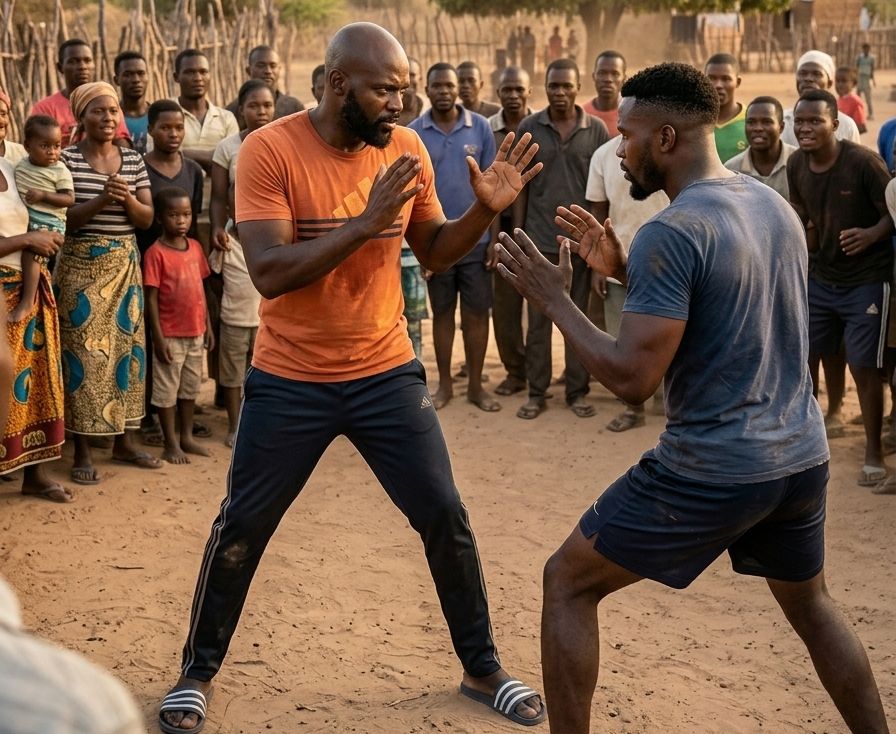
The Namibia Indigenous Combat Sports Federation (NICSF) has reaffirmed its commitment to preserving and promoting Namibia’s traditional combat sports while outlining ambitious plans to expand the discipline across all fourteen regions of the country.
In an official statement released on Wednesday, NICSF said it is the nationally recognized regulatory body responsible for indigenous combat sports in Namibia and is registered with the Namibia Sports Commission under the Namibia Sports Act of 2003.

The federation oversees three traditional combat disciplines:
Nkandeka – Open Palm Boxing

Odjubu – Bull Power Wrestling
Iimuti – Stick Fighting
According to the federation, these sports are organized through structured local, regional, and national leagues across three competitive divisions: Lower, Junior, and Top Divisions. Athletes progress through a ranking system based on their performances, with each division crowning its own champion.
“NICSF conducts structured local, regional, and national leagues and championship tournaments across three competitive tiers,” the statement said.
Participation is open to both men and women from the age of 12, including a dedicated youth category. Beyond competition, the federation also provides training opportunities for coaches, referees, judges, physical trainers, and other sports officials.
The federation emphasized that indigenous combat sports are deeply rooted in Namibia’s cultural heritage, particularly within the warrior traditions of northern communities stretching from the Kunene to the Zambezi regions. Historically, these disciplines played a significant role in physical fitness, bravery, rites of passage, traditional ceremonies, and community development.
Looking ahead, NICSF identified nationwide expansion as its immediate priority.
“Our immediate priority is to establish a stable presence in all fourteen regions of Namibia,” the federation stated.
A key part of its long-term vision is the creation of the Warrior Academy (Enongelo Ioukwaita), which will combine combat sports training with cultural and vocational skills development. The academy is expected to offer training in blacksmithing, leatherwork, ceramic pottery, indigenous dance, and poetry as part of efforts to preserve and advance Namibia’s cultural heritage.
The federation also announced that, following extensive research, youth exhibitions, and promotional activities, it is now ready to engage with sponsors and development partners.
“Having completed extensive research, youth exhibitions, and promotional trials, NICSF is now fully prepared to welcome sponsorship partnerships and philanthropic support to elevate indigenous combat sports to national and international prominence,” the statement added.
The statement was issued by Hidipo Nangolo, Secretary General of the Namibia Indigenous Combat Sports Federation.
About the Author

Karrel Hamutenya is a senior sports journalist at The Updated World, with more than five years of experience reporting on local sport in Namibia and international sports news.His work covers match reports, transfer updates, and exclusive interviews with athletes, providing fans with deeper insight into the game and the people behind it.
Related Contents