Havana Road Delays Linked to Relocation and Trading Challenges

Questions over persistent congestion and delays at the Havana four-way intersection in Windhoek have prompted a Parliamentary Standing Committee to visit the area and assess the challenges affecting the ongoing road construction project.
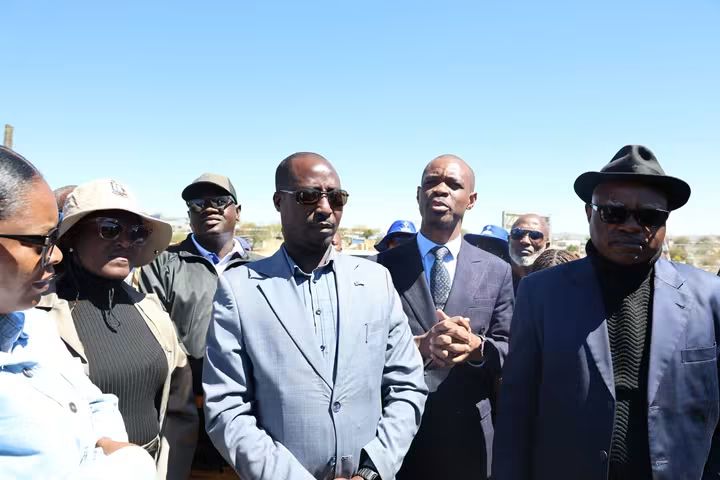
The Parliamentary Standing Committee on Urban and Rural Development and Land Reform visited the Havana road construction site and relocation areas in Havana Extensions 8 and 11 to obtain first-hand information on the progress of the project.
The City of Windhoek explained that the delays are not solely linked to construction work, but are also being affected by the relocation of households occupying areas required for road infrastructure and planned developments.
According to the City, some households have declined to relocate despite arrangements being made and essential services being provided at the designated relocation sites.

The City and the developer have conducted several community meetings and awareness engagements to explain the development plans, relocation arrangements and the expected benefits of the project.
So far, 98 of the 169 households identified for relocation have moved to Havana Extensions 8 and 11.
Informal traders operating along the main road have also expressed concern about relocation, particularly the possibility of losing customers if they are moved away from their current trading areas.
However, the City clarified that the informal traders are not part of the household relocation process.
The traders are expected to be temporarily accommodated at a nearby site while the Monte Christo Community Market is being constructed.
The permanent market is planned close to the main road, allowing traders to maintain access to their customers once construction is completed.
The City further indicated that informal trading activities within the road reserve are currently obstructing construction work and contributing to delays in completing the road.
The Havana road project forms part of a wider development programme for the area.
The City plans to invest N$110 million in Havana Extension 8 and N$62 million in Havana Extension 11.
Land servicing is scheduled for 2026–2027, followed by the planned construction of 425 low-cost housing units during 2027–2028.
In the short term, the City may deploy City Police traffic officers to assist with traffic management and maintain order at the Havana four-way intersection.
However, the City acknowledged that such measures would only provide temporary relief, with congestion likely to continue until the road works are completed.
Following efforts to secure voluntary relocation, the City is now pursuing legal measures to address outstanding relocations and make the land required for the development available.
During the visit, the Parliamentary Committee was accompanied by the City Mayor, councillors, Chief Executive Officer and other municipal officials.
The delegation inspected the road construction site and the relocation areas, including the services available to residents.
The Committee also sought to understand the challenges surrounding the relocation process and concerns raised by affected communities.
Committee Chairperson Hon. Werner Iita said the Committee was satisfied with the progress made and the plans in place to provide essential services at the relocation sites.
The visit provided the Committee with a clearer picture of the factors contributing to the delays and congestion at the intersection.
The Committee is expected to consider how it can assist the City in addressing the outstanding challenges and accelerating the project.
For residents and motorists, the immediate priority remains the completion of the road, improved traffic flow and the continued development of the Havana area.
 TUW
TUWRelated Contents