Consultants Submit N$22 Million Proposal for Nkurenkuru Sports Centre Development

NKURENKURU — The planned development of the Nkurenkuru Sports Centre has moved into a detailed planning phase, with consultants putting the estimated value of Phase 1B at N$22.03 million, inclusive of VAT.
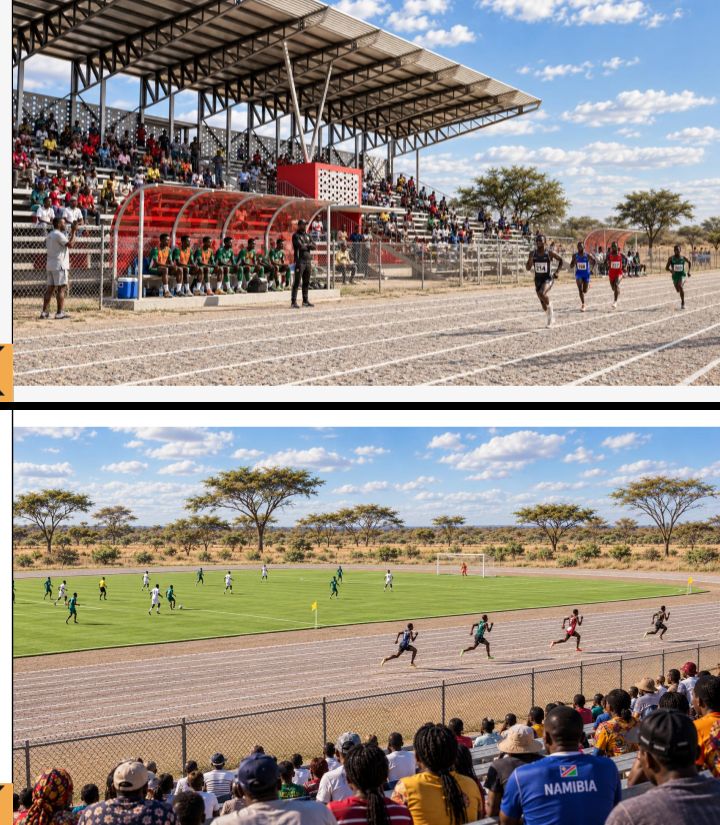
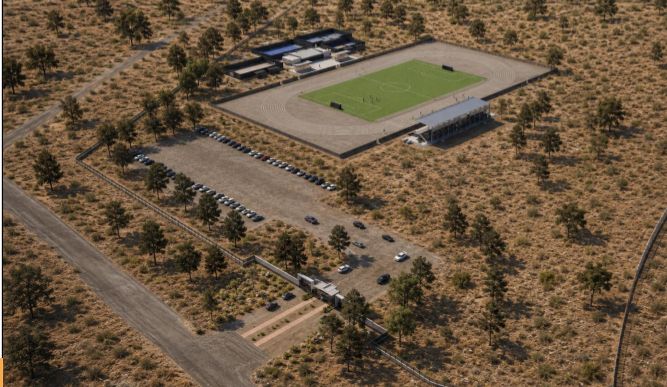
The proposal seen by The Updated World outlines key sporting infrastructure, including a 1,000-seat pavilion, a football field and running track, improvements to basketball, volleyball and netball facilities, as well as electrical and other external works.
The proposal was prepared by Kerii & Associates Architects Inc., Richard Frankle & Partners and Denchi Consulting Engineers for the Ministry of Education, Innovation, Youth, Sports, Arts and Culture.
The 1,000-seat Grand/Mini Pavilion represents the largest component of the Phase 1B proposal, with an estimated allocation of about N$11.4 million.

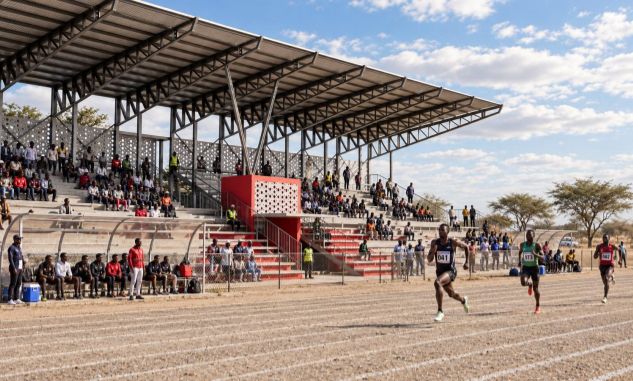
The planned facility will provide spectator seating alongside changing rooms and ablution facilities, creating a dedicated venue for sporting events at the centre.
The football component is another major part of the development, with about N$5.5 million allocated towards the soccer field and running track.
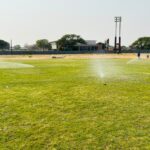
The work is expected to include site preparation, compacting and levelling, subsoil drainage, irrigation, and the planting and establishment of Kikuyu grass.
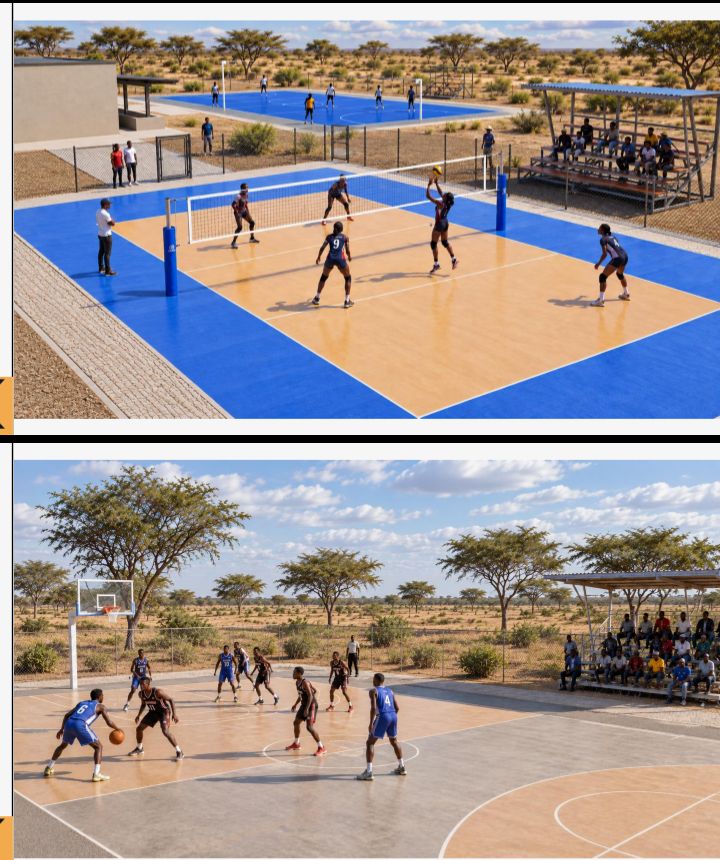
The proposal also provides for the refurbishment and improvement of the basketball, volleyball and netball courts. The works include refurbishment, painting, line marking, fencing and movable seating.
Approximately N$2.5 million is allocated to external works and electrical infrastructure.
This includes the NORED bulk power connection, 1000V cable reticulation, general site and driveway lighting, and perimeter fencing around the main football field and sporting courts.
Together, these components make up the revised N$22,026,906 Phase 1B estimate, including VAT.
Proposed Construction Programme
The proposed construction programme covers 168 days, running from 14 September 2026 to 30 April 2027.
Work on the football field and running track is scheduled to continue until 17 March 2027, while the basketball, volleyball and netball court works are scheduled from September to 18 December 2026.
Construction of the 1,000-seat pavilion is expected to begin on 28 October 2026, with the programme targeting completion by 21 April 2027.
External works and power infrastructure are scheduled between 1 November 2026 and 4 February 2027.
The final stage will involve testing, commissioning and practical completion, scheduled for 24 to 30 April 2027.
Further Development Planned for Future Phases
Phase 1B will not deliver the entire planned Nkurenkuru Sports Centre.
The project documentation identifies additional infrastructure for future phases, with those works estimated at N$50.43 million including VAT.
Among the future developments is another 1,000-seat pavilion, which would take the planned spectator capacity to 2,000 seats.
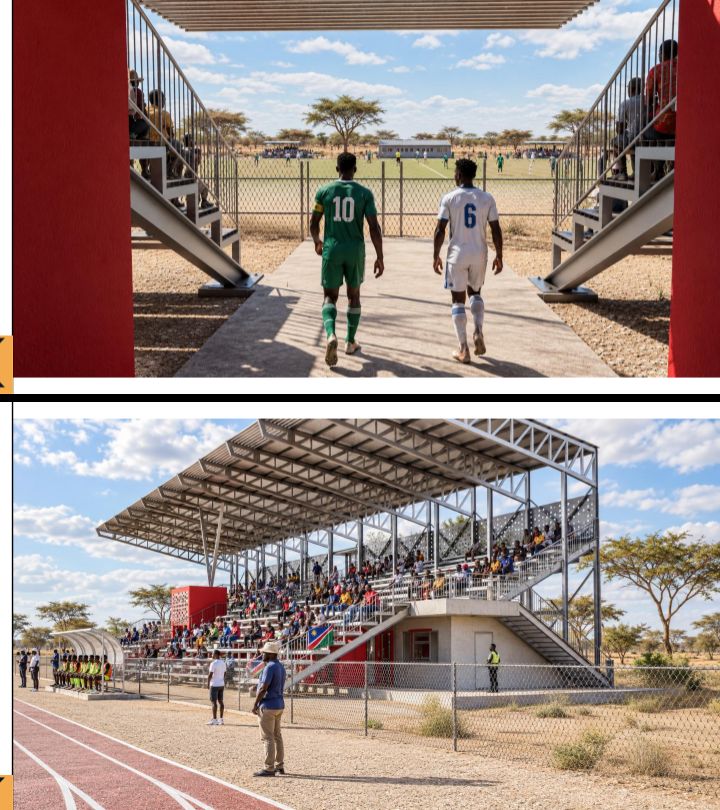
The future scope also includes dedicated public ablutions and match officials’ changing rooms, a ticket booth and guardhouse with an entrance canopy, a new tennis court, gravel roads and parking areas.
Dedicated football field floodlighting and HVAC installations are also deferred to later development phases.
Engineers Assess Water and Lighting Options
Separate technical assessments in the project documentation examine options for water supply and future floodlighting.
For water supply, the consultants compared a borehole system and river pumping. The assessment puts the two options at approximately N$1.9 million and N$1.6 million respectively, including VAT.
The borehole option includes drilling, pumping equipment and solar-related infrastructure.
The engineers also assessed whether future floodlighting should rely on solar power or the electricity grid.
Denchi Consulting Engineers recommend a grid-powered system, pointing to the potential impact of prolonged cloud cover and heavy rainfall on solar charging and battery performance.
The assessment states that reduced solar generation during rainy periods could affect reliability, while repeated deep battery discharge could also increase maintenance requirements.
The consultants further note that the sporting courts are expected to be used mainly during daylight hours, meaning electricity demand for lighting would be relatively limited.
The proposed Phase 1B represents one stage of the wider Nkurenkuru Sports Centre development, with the current N$22.03 million proposal focused on core sporting facilities and essential supporting infrastructure, while a further N$50.43 million in works remains earmarked for future phases.
 TUW
TUW Guest
GuestRelated Contents