Change Our Money Behaviour’: Kashumali Urges Namibians to Rethink Borrowing Habits


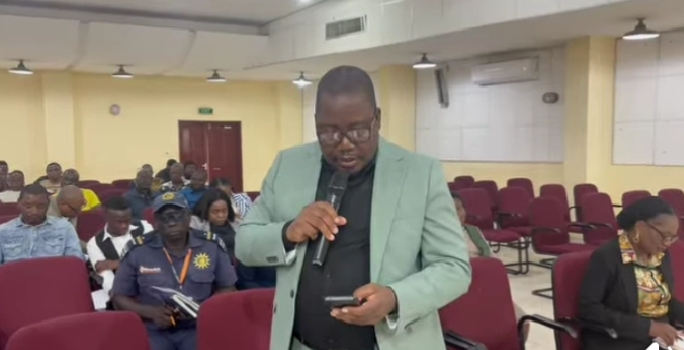
Increasing salaries for civil servants may provide some financial relief, but it will not by itself resolve Namibia’s growing household debt problem, Mashare Constituency Councillor Petrus Kashumali has cautioned.
Kashumali said the country’s debt challenges require more than government interventions, arguing that Namibians must also take greater responsibility on how they manage their income, use credit and make borrowing decisions.

He was speaking on Wednesday during a public hearing in Rundu convened by the National Assembly Standing Committee on Economy and Industry, Public Administration and Planning to examine whether existing laws are adequately protecting Namibians from exploitation by lending institutions and informal money lenders.
According to Kashumali, some civil servants find themselves trapped in a cycle of borrowing after taking loans from several lending institutions at the same time.

He said the situation can become particularly difficult when borrowers exhaust their access to formal credit and subsequently turn to unregistered microlenders to meet their financial obligations.
“Changing our money behaviour” should therefore form part of the broader response to Namibia’s debt concerns, Kashumali argued.
He acknowledged that calls for improved salaries for civil servants are understandable, particularly as households face rising financial pressures.
However, he maintained that higher incomes without responsible financial management could fail to produce lasting improvements in household finances.
Kashumali urged borrowers to assess their ability to repay loans before entering into credit agreements and to avoid taking on multiple debts simply to cover existing financial commitments.
He also called for greater financial discipline, saying individuals need to develop better habits around budgeting, saving and responsible borrowing.
At the same time, Kashumali stressed that responsibility should not rest entirely on borrowers.
He called for stronger measures to protect consumers from lending practices that can leave financially vulnerable people heavily indebted.
He said regulatory authorities must ensure that lending institutions operate within the law and that borrowers are adequately protected from exploitative practices.
The councillor’s remarks come as concerns over indebtedness continue to feature prominently in discussions about the financial wellbeing of Namibian households, particularly among salaried workers who have access to multiple credit facilities.
The Rundu public hearing is part of Parliament’s efforts to gather first-hand experiences from communities and stakeholders on the effectiveness of existing laws governing lending institutions and informal money lenders.
Members of the public are expected to share their experiences of borrowing, repayment pressures and interactions with both registered and informal lenders, providing lawmakers with information that could inform possible legislative and policy recommendations.
Kashumali’s intervention placed the issue within a broader debate: while government may need to consider measures that improve workers’ financial circumstances and strengthen consumer protection, individuals must also examine their own borrowing patterns.
For him, tackling Namibia’s debt problem will ultimately require a two-sided approach — better protection from predatory lending and a stronger culture of financial responsibility among borrowers.
About the Author

The Updated World delivers timely and well-researched articles on various topics, including the latest news updates, health, wellness, sports, current affairs, and more.
 TUW
TUW Guest
GuestRelated Contents