Africa Warned of Potentially Hotter August–September as El Niño Builds

Africa is facing the prospect of a significantly warmer August-to-September period as a developing El Niño event strengthens, according to the latest outlook from the United Nations World Meteorological Organization (WMO).
El Niño is a natural climate phenomenon that happens when ocean waters in the central and eastern tropical Pacific Ocean become unusually warm.
That warming can affect weather patterns far beyond the Pacific. It can change rainfall, temperatures, drought conditions and storms in different parts of the world.
The climate phenomenon is also expected to disrupt normal rainfall patterns in several parts of the world, with some regions likely to experience wetter conditions while others, including parts of southern Africa, face an increased risk of drought.

The WMO’s latest forecast, released on 31 July, indicates a high probability of above-average temperatures across the African continent during the August-to-September 2026 season. Southern Africa and South America are among the areas where the strongest signals for unusually high temperatures have been identified.
The expected changes are linked to the developing El Niño, a climate pattern associated with unusually warm sea-surface temperatures in parts of the Pacific Ocean. Its effects can extend far beyond the Pacific, influencing temperatures and rainfall patterns in different parts of the world.
According to the WMO, wetter-than-normal conditions are anticipated in the Greater Horn of Africa, parts of Central Asia, Southern Europe, western North America south of 45°N, and southeastern South America. In contrast, some areas of southern Africa could experience drier conditions as rainfall patterns shift.
UN Secretary-General António Guterres warned that the strengthening El Niño is adding further pressure to an already warming planet.
“El Niño is strengthening – adding fuel to a planet already on fire with scorching heat domes, apocalyptic wildfires and record hot seas,” Guterres said.
The economic consequences could also be significant for African countries. The African Development Bank estimates that a strong El Niño could result in combined losses of between US$10 billion and US$20 billion across several African economies.
WMO Secretary-General Celeste Saulo said the current situation should encourage governments and communities to prepare before the climate impacts become more severe.
“This El Niño developing against the backdrop of unprecedented ocean heat and rising temperatures, provides governments and communities with a window of opportunity to anticipate risks and act before impacts unfold,” Saulo said.
How El Niño is monitored
Scientists track El Niño by monitoring sea-surface temperature changes in a specific region of the Pacific Ocean and comparing them with long-term averages.
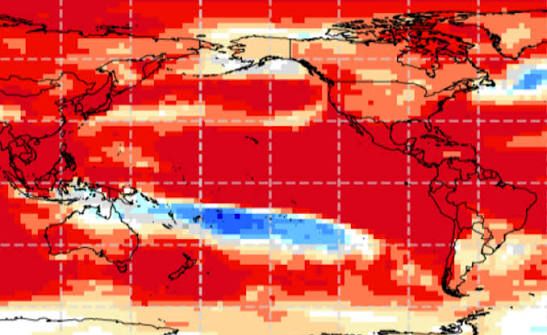
The United States National Oceanic and Atmospheric Administration (NOAA) uses observations, including satellite data, to identify these temperature anomalies. Warmer-than-normal conditions indicate El Niño, while unusually cooler conditions are associated with La Niña.
NOAA’s latest observations show temperature anomalies approaching 1°C emerging since July 2026. If the warming trend continues, the developing event could strengthen considerably.
The WMO has therefore urged governments and communities to use the current warning period to strengthen preparedness, particularly in areas vulnerable to extreme heat, drought and rainfall disruptions.
 TUW
TUWRelated Contents