Portable sonar technology brings life-saving diagnostics closer to communities


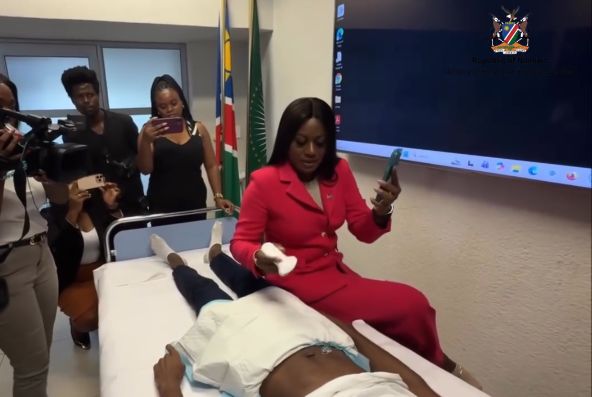
Namibia’s Ministry of Health and Social Services has taken a step toward decentralised healthcare delivery with the introduction of handheld sonar probes, funded by the Capricorn Foundation.
The ministry confirmed that three portable imaging devices have been acquired, marking the first time handheld sonar technology is being deployed within the country’s public health system.

According to officials, the probes are designed for use in clinics, outreach programmes, and remote settings. Each unit weighs under one kilogram, can connect directly to a smartphone or tablet, and functions without internet connectivity a feature considered critical for rural and hard-to-reach communities.
Health authorities say the devices will support obstetric and gynaecological assessments, including pregnancy monitoring and the detection of conditions such as fibroids, cysts, and polyps. Beyond maternal care, the probes can also be used to scan soft tissues and major organs, including the heart, liver, kidneys, bladder, uterus, and prostate.

Medical staff explained that the technology enables frontline workers to quickly evaluate patients for internal bleeding, abnormal fluid accumulation, blood flow complications, and other potentially life-threatening conditions. The probes can additionally assist in guiding certain clinical procedures, such as needle insertions and abscess drainage.
Speaking on the partnership, Dr Luvindao said the ministry approached the Capricorn Foundation late last year while advancing its healthcare decentralisation strategy. After several engagements, the foundation committed to funding the initial batch of probes.
The Capricorn Foundation described the contribution as part of its focus on projects that drive systemic change. Its executive director noted that access to basic diagnostic imaging remains a challenge across many African countries, where patients often travel long distances and incur high transport costs for routine scans.
Health officials believe the introduction of handheld sonar probes could help reduce delays in diagnosis, improve referral decisions, and contribute to lowering maternal, newborn, and emergency-related deaths, particularly in underserved regions.
“The ministry is not merely adding equipment; we are redesigning how care is delivered,” Dr Luvindao said.
The devices are expected to be deployed in high-volume and remote service areas, with usage limited to trained medical officers and community health workers.
About the Author

The Updated World delivers timely and well-researched articles on various topics, including the latest news updates, health, wellness, sports, current affairs, and more.
Related Contents