Bridging the Distance: Namibia Deploys 19 New Ambulances in Push to Overhaul Emergency Healthcare


For thousands of Namibians living in remote communities, a medical emergency is rarely just a race against the clock it is a battle against sheer distance. Across a country defined by vast stretches of sparsely populated terrain, getting a critically ill patient from a rural village to the nearest clinic has long been one of the public health sector’s most stubborn vulnerabilities.
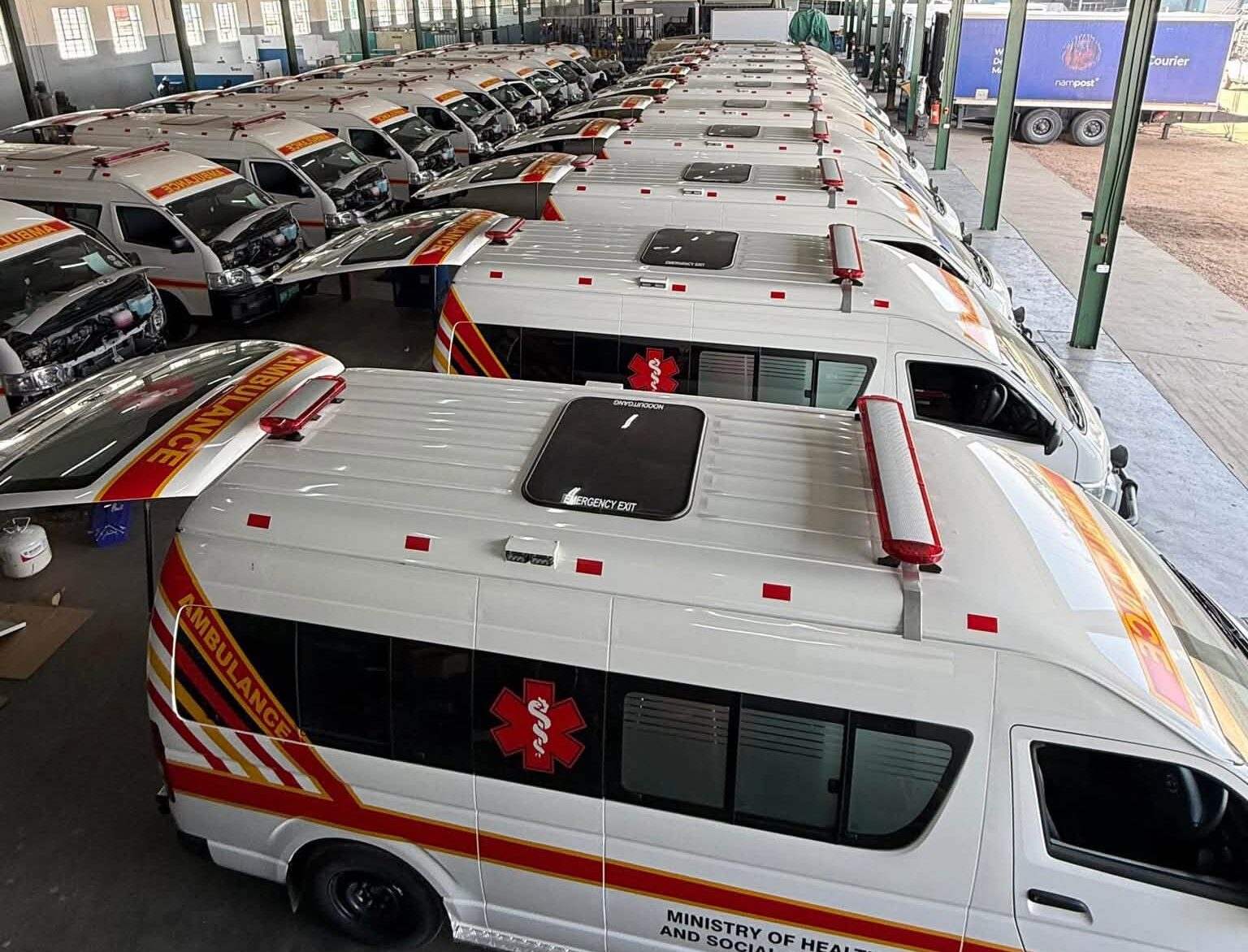
This week, the Ministry of Health and Social Services (MHSS) moved to narrow that gap, officially commissioning 19 brand new ambulances. The fleet, fully bankrolled by the Namibian government, will be rolled out nationally with a clear mandate: prioritize the regions buckling under the worst transport shortages.
Instead of splitting the vehicles evenly across administrative borders, health officials say deployment will be dictated by where the strain on local clinics and communities is most acute. It is a targeted response to months and in some areas, years of mounting public frustration over grounded fleets and delayed emergency pickups.
Speaking at the commissioning, the Minister of Health framed the delivery around the stark realities of rural healthcare access. In areas where communities are cut off from medical centers by what the Minister described as “unbearably long distances,” a functioning ambulance is often the only thing standing between a patient and preventable tragedy.
“These 19 new ambulances will be the difference between life and death for thousands of Namibians who would otherwise be unable to reach a health facility in time,” the Minister said.
Even as officials welcomed the arrival of the state-of-the-art units, there was little pretense that 19 vehicles will erase the national backlog overnight. Between punishing road conditions and persistent maintenance hurdles, keeping emergency vehicles on the road remains an uphill climb.
The Ministry’s Executive Director struck a candid tone regarding the road ahead, acknowledging that while the commissioning is a milestone worth marking, the fleet still falls short of meeting full national demand. Rather than a finish line, officials are framing the rollout as groundwork toward building an emergency response system that is “fit for purpose” and reliable when citizens need it most.
Part of that long-term fix lies in policy currently sitting on the Ministry’s desk. The MHSS confirmed it is in the final stretch of drafting a five-year emergency fleet strategic plan a blueprint meant to pull the health system out of reactive, piecemeal vehicle buying and establish clearer forecasting for regional demand and fleet upkeep.
For families and frontline nurses in underserved regions, however, policy blueprints matter far less than what arrives in the driveway. As the 19 new units prepare to hit the road, the immediate test will be how quickly they reach the communities that have been waiting the longest.
About the Author

Andreas Erastus is a journalist at The Updated World, reporting on community news, events and interviews across northern and southern Namibia. He holds an Honours Degree in Media and has experience with media outlets, including Eagle FM.
Related Contents