Erongo and Khomas Lead Namibia’s Internal Migration as Northern Regions Record Outflows


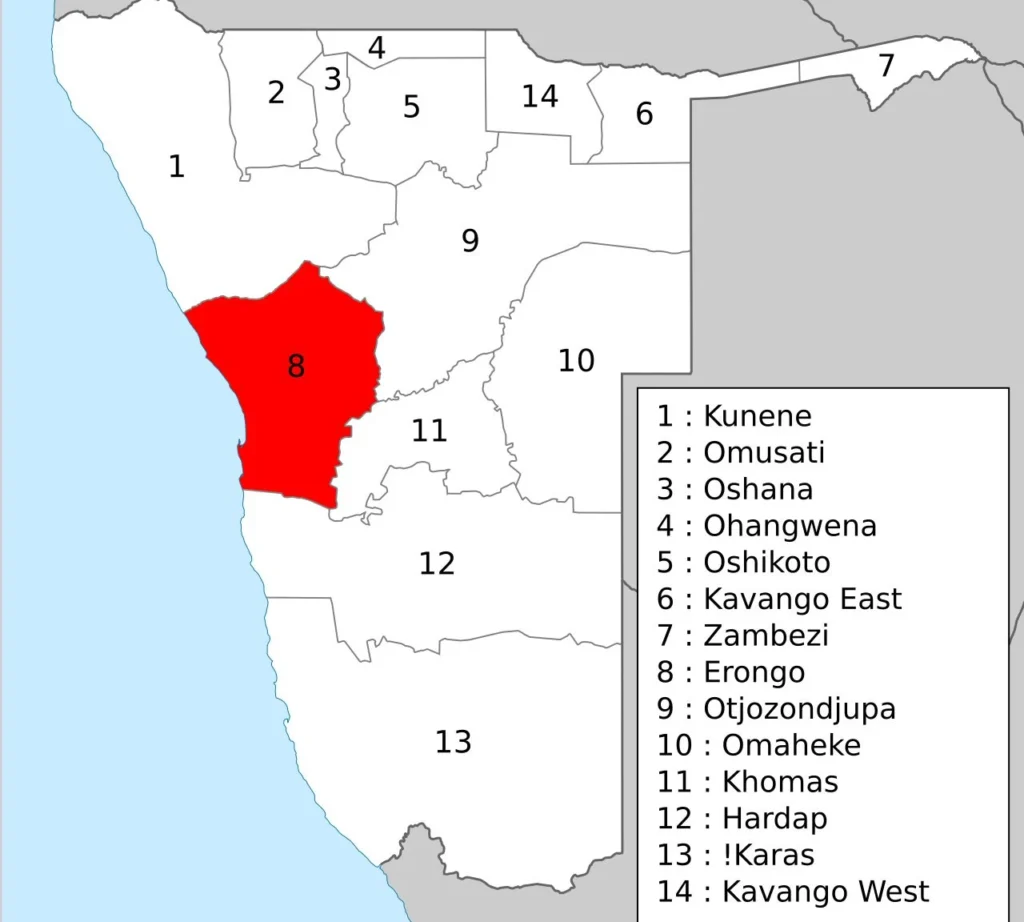
Erongo and Khomas have emerged as Namibia’s leading destinations for internal migration, while several northern regions continue to experience significant population outflows, according to the Namibia Statistics Agency’s (NSA) 2023 Population and Housing Census Migration Report.
The findings highlight differences in population movement across the country’s 14 regions, with economic opportunities, urbanisation, education and employment prospects influencing where people choose to live.
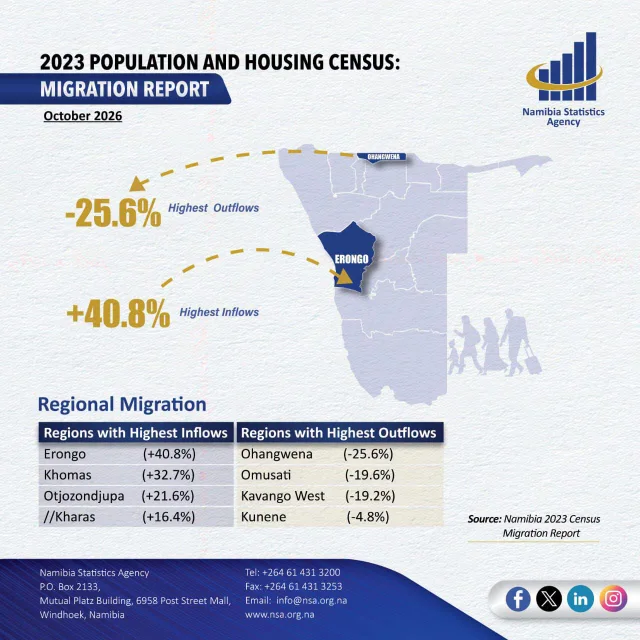
Erongo recorded the country’s highest net migration gain at 40.8%, followed by Khomas at 32.7%. The figures point to the growing importance of coastal and central economic centres in attracting people from other parts of Namibia.
Erongo’s position is linked to economic activities in areas such as mining, fishing, logistics and tourism, particularly around Walvis Bay and Swakopmund.

Khomas, which includes the capital city of Windhoek, also attracts people seeking employment, tertiary education, government services and other economic opportunities.
Other regions recording positive net migration figures were Otjozondjupa, with 21.6%, and //Kharas, with 16.4%.
The leading regions by reported net migration gain were:
- Erongo: +40.8%
- Khomas: +32.7%
- Otjozondjupa: +21.6%
- //Kharas: +16.4%
Ohangwena Leads Population Outflows
While some regions continue to attract residents from elsewhere, others recorded substantial net outward migration.
Ohangwena had the largest reported net migration decrease at 25.6%, followed by Omusati at 19.6% and Kavango West at 19.2%. Kunene also recorded a negative figure of 4.8%.
The figures highlight differences in population movement between regions and raise questions about the availability of employment, education and other opportunities that influence decisions to relocate.
The leading regions by reported net migration outflow were:
- Ohangwena: -25.6%
- Omusati: -19.6%
- Kavango West: -19.2%
- Kunene: -4.8%
Migration Raises Development Planning Questions
The migration patterns have important implications for regional development and the delivery of public services.
Regions attracting more residents may face increasing demand for affordable housing, water, electricity, healthcare, schools and other municipal services. Authorities will need to consider population growth when planning infrastructure and allocating resources.
Meanwhile, regions experiencing substantial outward migration may benefit from stronger local economic development, agricultural support, skills development and employment creation to expand opportunities within their communities.
The findings provide a basis for policymakers to assess how population movements affect development across Namibia and identify measures to address regional economic disparities.
As Namibia continues to urbanise, understanding why people move between regions will remain important for planning sustainable communities, improving access to services and ensuring that development opportunities reach all parts of the country.
About the Author

The Updated World delivers timely and well-researched articles on various topics, including the latest news updates, health, wellness, sports, current affairs, and more.
Related Contents