Boko Defends UDC Reforms, Says Botswana Is Undergoing Economic Transformation


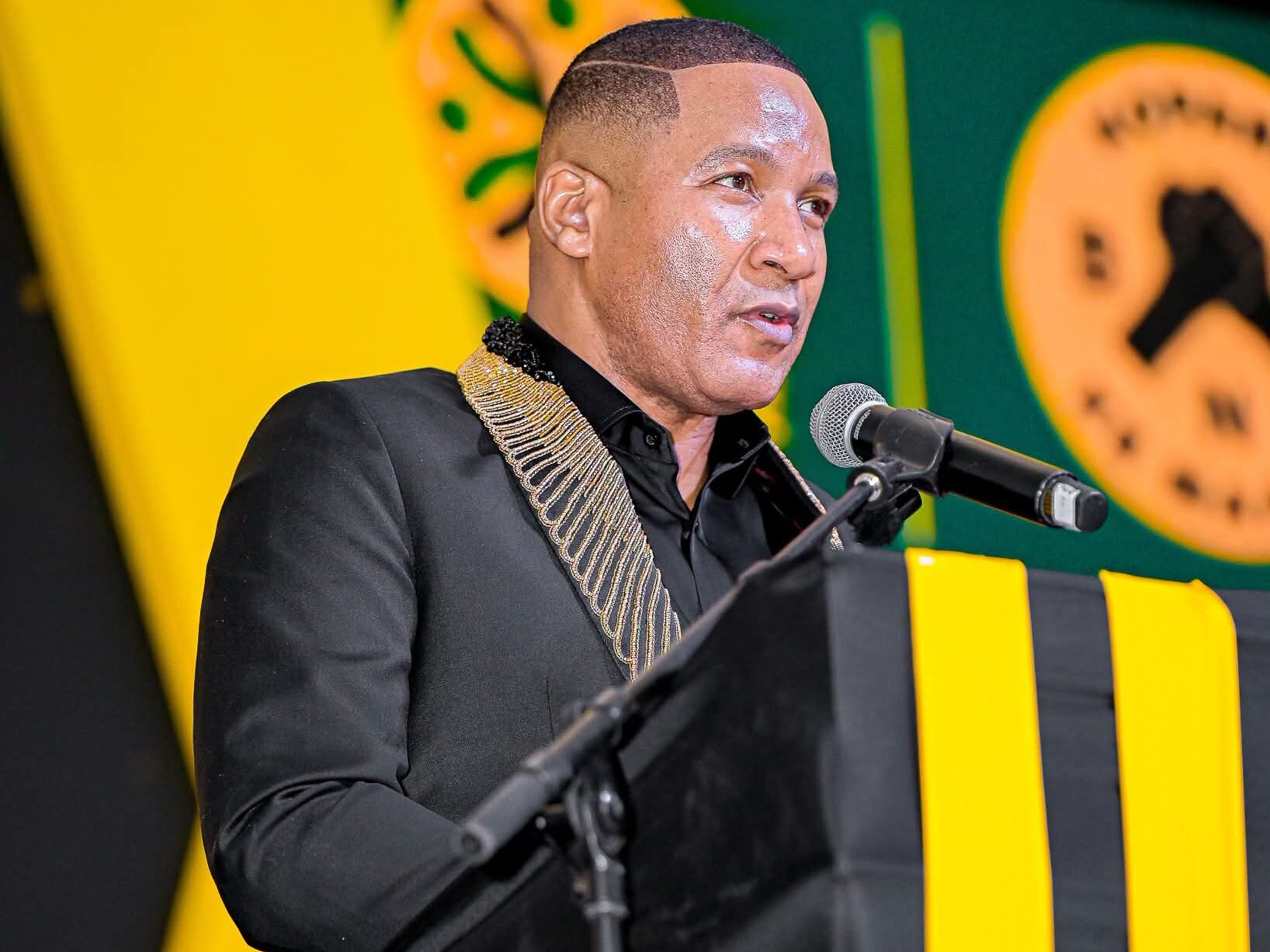
Botswana President Duma Boko has defended his government’s reform agenda, saying the country is undergoing a difficult but necessary economic transformation aimed at reducing dependence on diamond revenues, rebuilding public institutions and creating a more inclusive economy.
Addressing members of the Botswana National Front (BNF), a constituent party of the ruling Umbrella for Democratic Change (UDC), Boko said his administration inherited a weakened economy, declining government revenues and public institutions burdened by inefficiency, but insisted that the country is steadily recovering through disciplined reforms.

“We took over a broken country, a collapsing economy and a nation bereft of hope,” Boko said. “We came to heal and restore, and the people responded by voting for a new story for Botswana.”
He described the UDC’s rise to power as the result of years of strategic political planning rather than chance, crediting the 2010 BNF Congress resolution to pursue opposition unity as the foundation that eventually led to the formation of the UDC coalition.

Boko said political alliances require compromise and drew on the writings of Vladimir Lenin and Friedrich Engels to argue that successful political movements must adapt to changing circumstances while remaining committed to their principles.
He urged party members to strengthen organisational structures, embrace digitalisation and use data-driven decision-making to improve governance.
The President acknowledged that Botswana faces significant economic challenges, including declining diamond revenues, reduced exports, pressure on government finances, unemployment and shortages in the health sector.
He noted that diamond revenues, which transformed Botswana into an upper-middle-income country, have been declining for more than a decade due to weakening global demand.
“These are truths. We cannot sidestep them. We cannot wish them away,” Boko said.
Despite these challenges, Boko said government was making measurable progress.
He announced that first-quarter government revenue collections increased by 5.4 percent to P15.36 billion, while tax revenues grew by 7.9 percent, marking the fifth consecutive quarterly increase. Pay As You Earn (PAYE) collections also increased by 12.9 percent.
According to Boko, Botswana’s fiscal reserves have grown from about P300 million when the UDC took office in October 2024 to P6.1 billion, while government cost-containment measures have generated cumulative savings of P2.73 billion since August 2025.
“We are not there yet, but we are moving one step at a time,” he said.
The President said government has begun refurbishing 22 schools across the country through a P50 million programme expected to create between 8,000 and 10,000 direct jobs.
In healthcare, Boko announced that Botswana had received a seven-month supply of essential medicines, including drugs for hypertension, diabetes and bacterial infections. He also confirmed that recruitment had begun for 300 nurses to address a national shortage exceeding 1,000 healthcare workers.
Boko accused previous administrations of creating inefficient medicine procurement systems that inflated prices and limited competition.
He said government is reforming procurement policies to ensure citizen empowerment benefits manufacturers and value-adding businesses rather than intermediaries.
The President also outlined plans to strengthen debt management, noting that Botswana now needs stronger systems to manage borrowing and mobilise investment capital.
He said government aims to increase manufacturing’s contribution to Gross Domestic Product from about six percent to 15 percent by 2030 through greater value addition and industrial development.
Agriculture, he said, remains another priority.
Boko announced that the first 200 dairy cattle for the Milk Valley project had arrived, while the Leshima Horticulture Market is expected to open in August 2026 to provide farmers with direct access to consumers.
He said the market would reduce farmers’ dependence on large retail chains, which some producers claim purchase vegetables at very low prices before reselling them at significant mark-ups.
“The road to the customer does not pass through the toll gate of any chain store,” Boko said. “Farmers must have direct access to consumers.”
Government is also investing in renewable energy through a 500-megawatt solar project at Mmamabula, where engineering work has commenced ahead of the appointment of an Engineering, Procurement and Construction contractor.
Boko further announced that Botswana’s National Health Insurance programme is at an advanced stage and is expected to begin pilot implementation later this financial year as part of government’s drive towards universal healthcare.
He stressed that universal healthcare should deliver high-quality services rather than merely expanding access.
Turning to corruption, Boko reaffirmed his administration’s commitment to accountability, saying forensic audits of public institutions had identified areas requiring criminal investigation.
He rejected criticism that government had failed to act on the audit findings, explaining that forensic audits identify possible wrongdoing while criminal investigations must gather evidence, trace financial transactions, freeze assets and prosecute offenders.
“There is no pussyfooting,” Boko said. “We are determined to end the culture of impunity.”
Boko also appealed to the public service, private sector, development partners and ordinary citizens to contribute to rebuilding the economy.
“Diversification is not achieved by government decree,” he said. “It is achieved by thousands of small decisions made in farms, factories, classrooms and kitchens across Botswana.”
Addressing young people, Boko encouraged them to seize opportunities in manufacturing, agriculture, renewable energy and the digital economy rather than waiting for government employment.
“The Botswana of diamonds alone belonged to our parents. The Botswana of diversification, clean energy and digital enterprise is ours to build and yours to inherit,” he said.
The President acknowledged that difficult fiscal decisions still lie ahead, revealing that government inherited approximately P3.7 billion in unpaid invoices dating back to 2015, which continue to place pressure on the country’s finances.
Nevertheless, he expressed confidence that Botswana would overcome its current challenges through unity and disciplined leadership.
“We will walk this path with our eyes wide open, our books honest and our resolve unbroken,” he said.
Concluding his address, Boko defended the UDC’s long-term vision, arguing that critics cannot fairly judge reforms they never envisioned.
“The change is about this vision—your vision, our vision—and we will achieve every bit of it,” he said.
He thanked party members for their continued support and pledged to remain accountable to the mandate given to his administration by the people of Botswana.
“I am your servant,” Boko said. “I remain faithful and committed to the mandate you have given.”
About the Author

The Updated World delivers timely and well-researched articles on various topics, including the latest news updates, health, wellness, sports, current affairs, and more.
Related Contents