Minister Dina Pule Vows to Restore Dignity to SASSA Beneficiaries Amid Long Queue Concerns


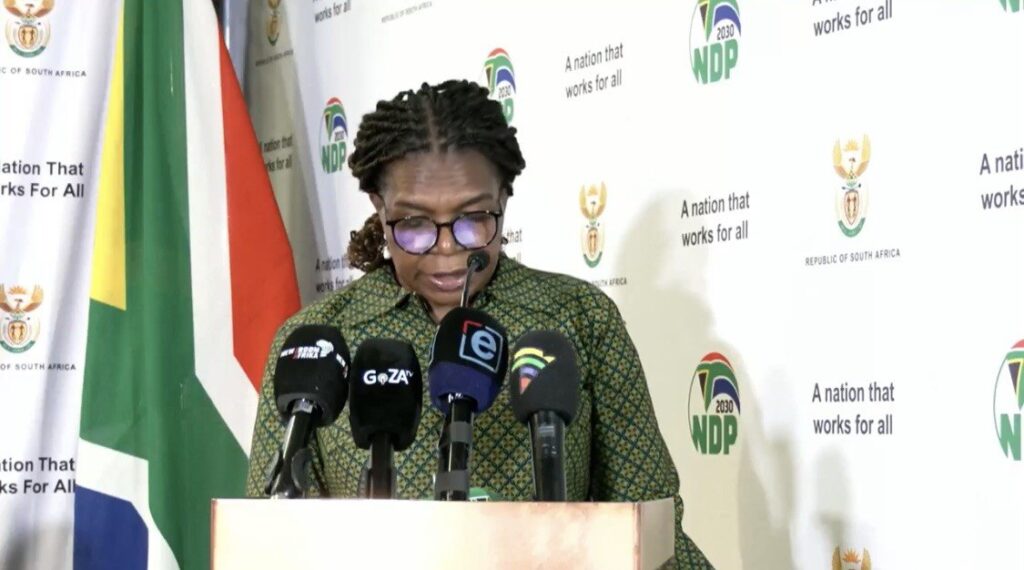
South Africa’s Minister of Social Development, Dina Pule, has pledged to restore dignity, confidence and respect to millions of social grant beneficiaries by improving service delivery at the South African Social Security Agency (SASSA), following widespread complaints about long queues and delays at service points.
Addressing the media, Pule said the government remains committed to ensuring that every eligible South African receives social assistance efficiently while protecting public funds from fraud and abuse.

“I accepted this position with humility and respect, and I will use it to restore the aspirations, confidence and dignity of all our social grant beneficiaries and communities who are facing long queues and frustrations in most of our offices,” Pule said.
The briefing coincided with SASSA’s 20th anniversary since its establishment under the South African Social Security Agency Act and the Social Assistance Act of 2004.

Pule described social grants as a lifeline for millions of vulnerable South Africans, including children, older persons and people living with disabilities.
“Behind every grant payment is a human story. It is a grandmother feeding her grandchildren, a child attending school and a family finding stability during difficult times,” she said.
The minister defended the agency’s ongoing social grant review process, saying it is a legal requirement aimed at ensuring that only eligible beneficiaries continue receiving grants.
According to Pule, more than 420,000 beneficiaries were flagged for review during the 2025/26 financial year, with over 240,000 reviews completed, while approximately 160,000 beneficiaries failed to present themselves for review.
For the 2026/27 financial year, SASSA plans to review more than 350,000 grants, a move expected to save the government about R1.5 billion, which could be redirected to other public priorities.
Pule said grant reviews are essential to verify beneficiaries’ financial, medical and personal circumstances and to protect the system against fraud, duplicate claims and incorrect payments.
Explaining how beneficiaries are selected for review, SASSA officials said the agency works with banks, the South African Revenue Service (SARS), credit bureaus and other financial institutions to verify whether grant recipients have other sources of income.
The reviews are based on data verification rather than random selection, with annual targets determined by the agency’s operational capacity.
Officials also clarified that the projected savings do not represent cash recovered by SASSA but rather reduced future government spending on grants paid to beneficiaries who no longer qualify.
Those savings are reflected in future National Treasury budget allocations and can be redirected to other government priorities.
To strengthen fraud prevention, SASSA has expanded biometric verification and electronic life certification, allowing beneficiaries to confirm their identity and eligibility through secure digital platforms.
The minister encouraged beneficiaries to use SASSA’s digital services to reduce congestion at local offices and announced several measures to improve customer service, including extending office operating hours and expanding home visits for beneficiaries aged 75 years and older, as well as frail individuals.
Pule also announced plans to personally visit SASSA offices across the country to monitor the implementation of the new interventions and engage directly with communities.
During the media briefing, journalists questioned the minister about the number of beneficiaries found to have committed fraud during the grant review process, how beneficiaries are selected for review, and what proportion of reviews result in grants being retained or cancelled.
The minister was also asked whether policy changes are being considered at SASSA and responded to criticism surrounding her appointment, saying her focus is on improving service delivery, strengthening accountability and ensuring that social assistance reaches every eligible South African with dignity and respect.
About the Author

The Updated World delivers timely and well-researched articles on various topics, including the latest news updates, health, wellness, sports, current affairs, and more.
Related Contents