Ramaphosa Calls for Stronger SADC Regional Integration Through Practical Action


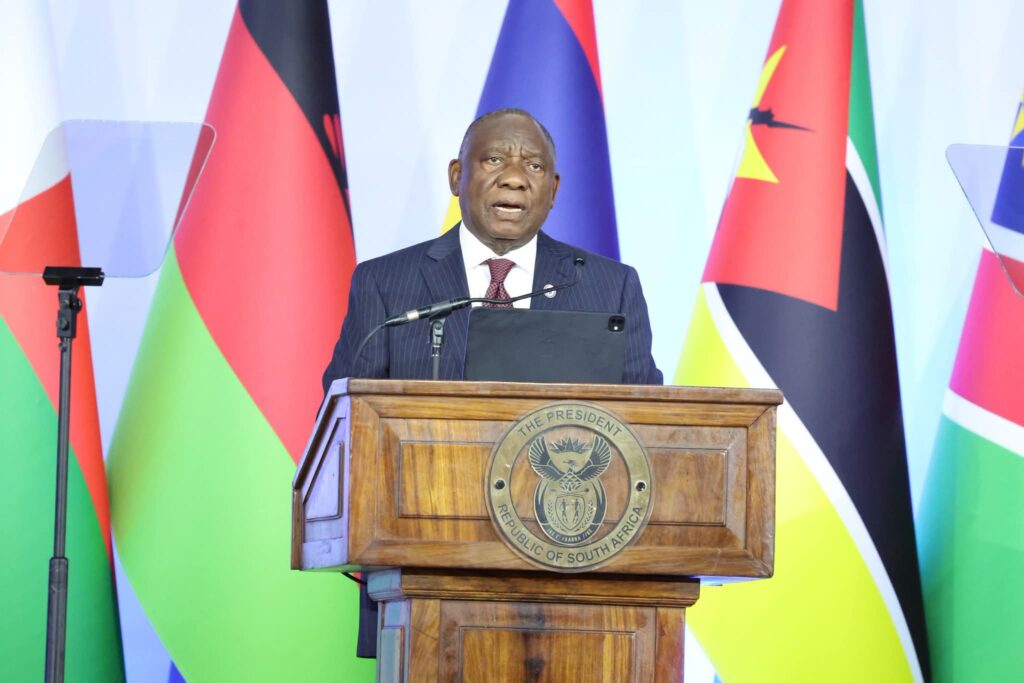
South African President Cyril Ramaphosa has called for stronger regional integration and practical action as Southern African leaders prepare for the 46th Ordinary Summit of the Southern African Development Community (SADC).
Ramaphosa delivered the keynote address at the SADC Public Lecture at the University of KwaZulu-Natal (UKZN), Westville Campus, in Durban on Friday. The lecture forms part of South Africa’s programme as host of the 46th SADC Summit of Heads of State and Government.

The engagement provided a platform to reflect on the future of Southern Africa and how SADC Vision 2050 can be translated into practical programmes that improve the lives of people across the region.
The official theme of the public lecture focused on “Translating SADC Vision 2050 into Action: Pathways Towards Solidarity, Equality and Shared Prosperity.”

It was designed to deepen public understanding of regional integration, economic transformation, peace, security and inclusive development.
Ramaphosa stressed the importance of moving beyond political commitments towards concrete action that can strengthen the region’s economic and social development.
Among the key areas highlighted in the regional agenda are infrastructure development, industrialisation, agricultural transformation and the beneficiation of critical minerals.
Southern Africa possesses significant mineral, agricultural, energy and human resources, and Ramaphosa has urged SADC member states to use these resources to drive the region’s own industrial development and reduce dependence on external markets.
The emphasis on critical minerals is particularly significant as countries across the region seek to increase local value addition instead of exporting raw materials.
Greater regional cooperation could help SADC countries develop stronger value chains, create employment and retain more economic benefits within the region.
Infrastructure development is also central to the regional integration agenda.
Improved transport, energy, communications and other infrastructure are considered essential for connecting SADC economies, facilitating trade and supporting industrial development.
Agriculture remains another important area for cooperation, particularly in strengthening food security and building resilient economies capable of responding to climate and other economic pressures.
The public lecture also placed regional solidarity and shared prosperity at the centre of SADC’s long-term vision.
The President said the engagement was intended to provide practical pathways for advancing regional integration, industrialisation, infrastructure development, peace, security and inclusive development.
Ramaphosa also addressed concerns surrounding the treatment of foreign nationals in South Africa, stressing that regional integration cannot be achieved if people from neighbouring countries are subjected to intimidation, discrimination or ill-treatment.
The issue is particularly relevant to SADC’s goal of strengthening regional cooperation and people-to-people ties. Greater economic integration depends not only on trade and infrastructure, but also on trust and cooperation among citizens of member states.
The Public Lecture comes ahead of the 46th Ordinary SADC Summit, which will bring regional Heads of State and Government together in Durban on 17 August 2026.
The summit is expected to address issues including industrialisation, infrastructure development, food security, regional integration and shared economic development.
South Africa is hosting the summit in Durban, with the programme forming part of the country’s broader efforts to strengthen regional cooperation and advance the implementation of SADC Vision 2050.
The discussions are expected to reinforce the need for SADC member states to work collectively in addressing common economic, social and developmental challenges.
The public lecture therefore served as an important platform ahead of the summit, highlighting the need for Southern Africa to turn its regional commitments into measurable programmes and projects that deliver tangible benefits to its people.
As SADC moves towards its next phase of regional cooperation, the focus will increasingly be on implementation — building infrastructure, strengthening food systems, adding value to natural resources, expanding industrial capacity and creating opportunities for citizens across the region.
The message emerging from the engagement is that a stronger SADC will depend on solidarity, shared responsibility and collective action to build a more resilient, inclusive and prosperous Southern Africa.
About the Author

The Updated World delivers timely and well-researched articles on various topics, including the latest news updates, health, wellness, sports, current affairs, and more.
 Guest
GuestRelated Contents