Dr. Alpo Mbamba Secondary School Responds to Claims Over School Uniform Supplier


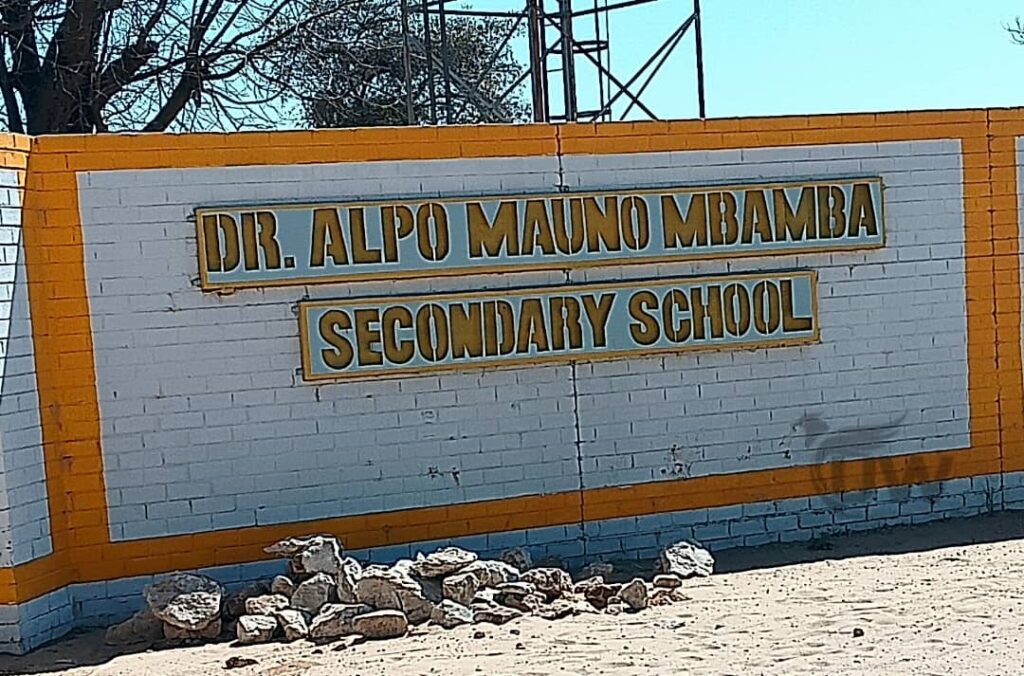
Dr. Alpo Mbamba Secondary School has dismissed claims that it stopped local tailors from producing the school’s uniforms and instructed teachers to source uniforms from South Africa.
The allegations were raised by a tailor during a Development Bank of Namibia (DBN) information-sharing session held at the Rundu Trade Fair last Wednesday. Following the claims, The Updated World visited the school on Monday to hear its side of the story.
The Updated World spoke to the school’s principal, Ms. Lucian E., and the Head of Department for Commerce and Social Sciences, Mr. Somene E., who both denied that local tailors had been excluded from supplying school uniforms.
According to the school management, the decision to work with a single supplier was taken after concerns were raised by parents during a school meeting about inconsistencies in the appearance of the uniforms. They explained that although different tailors used the same official colours, the shades often varied from one producer to another, making some uniforms appear darker or lighter than others. As a result, learners were no longer wearing uniforms that looked identical.
The principal also said the school’s logo became another challenge. Because several producers were making the uniforms, the logo often differed slightly from one tailor to another. In addition, the school’s logo is not free to use and must be obtained through the proper process. To protect the school’s identity and ensure that every learner wears the same standard uniform, the school decided it would be better to approve one supplier.
School management said the matter was discussed with parents, and the need for a single supplier formed part of those discussions. They added that the decision was not aimed at preventing local businesses from benefiting, but at ensuring consistency in quality, colour, branding and the overall appearance of the school’s uniform.
Regarding claims that uniforms are ordered from South Africa, the school said its approved supplier is a local Namibian, and she is a businesswoman like anyone else.
According to the principal, the supplier expressed interest in supplying the school, submitted a presentation outlining her proposal and demonstrated that she could meet the school’s requirements. She also completed the necessary arrangements to obtain permission to use the school’s logo. After considering her presentation and ability to meet the required standards, the school approved her as its official supplier through the required procurement process.
The principal stressed that the supplier’s decision on where to purchase materials or manufacture the uniforms is a business matter and not one determined by the school.
She compared the situation to clothing retailers such as PEP and other stores operating in Namibia, saying customers generally buy school uniforms without first asking where they were manufactured.
“Our responsibility is to ensure that learners receive quality uniforms that meet the school’s approved standards. Where the supplier sources materials or manufactures the uniforms is not the school’s concern, provided the final product meets the required quality,” the principal said.
School management further revealed that the tailor who raised the issue during the DBN information-sharing session had previously visited the school to raise the same concerns. According to the principal, the matter was fully explained to the parent during that visit before it was later raised publicly at the trade fair.
The school maintains that it has never stopped local tailors from doing business. Instead, it says the decision to appoint one approved supplier was made to address concerns raised by parents, protect the school’s official logo, maintain consistent colours and quality, and ensure that all learners wear uniforms of the same standard.
The Updated World remains committed to providing all parties with an opportunity to be heard in the interest of fair and balanced reporting.
About the Author

The Updated World delivers timely and well-researched articles on various topics, including the latest news updates, health, wellness, sports, current affairs, and more.
Related Contents